Threading the Light: The Projectionists Who Stayed When Everyone Else Walked Away
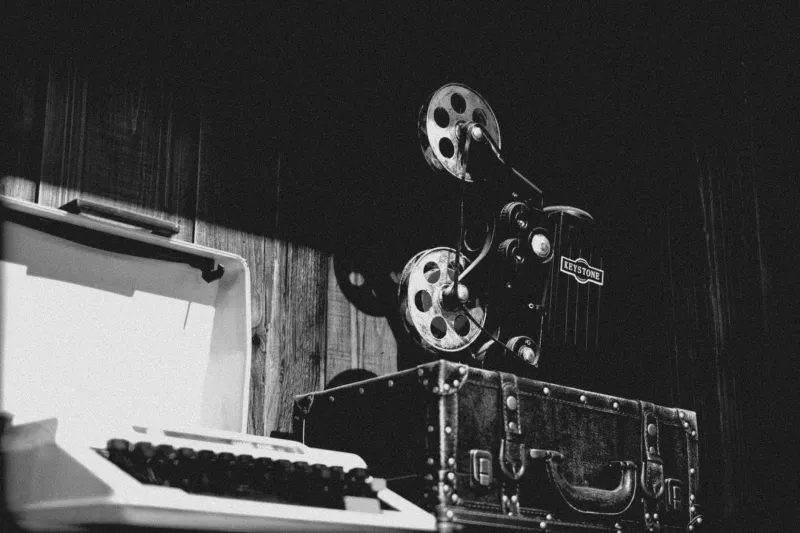
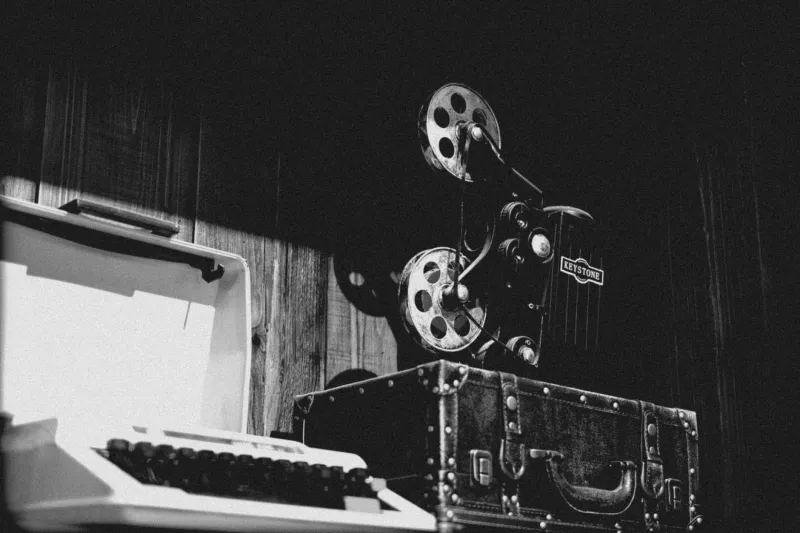
There's a small rectangular window cut into the back wall of almost every old movie theater in America. Most people have never looked up at it. The ones who have probably just noticed a faint beam of dusty light cutting through the dark. But for a shrinking group of people across the country, that window is the whole world.
They're analog projectionists — and there aren't many of them left.
The Booth Nobody Talks About
At a repertory cinema tucked into a strip of older storefronts in Albuquerque, a guy named Dennis has been running the booth since 1987. He's got a system. Two Simplex XL projectors, a carbon arc converted to xenon, a splicing block he's had since Carter was president. He knows which reels run hot, which films have bad splices from the last time they circulated, and exactly how much lead time he needs before a reel change so the audience never catches the flicker.
"Digital is fine," he says, without a hint of bitterness. "It's just not the same thing. It's not even trying to be the same thing."
He's not wrong, technically. A digital projector is a sophisticated computer. A 35mm projector is a mechanical instrument — gears, sprockets, a gate that holds each frame in place for a fraction of a second before the next one drops into position. When a film print runs through a projector, it's a physical object passing through light. Every scratch on it is real. Every imperfection is evidence of the thing having existed somewhere before it got to you.
That's the part Dennis can't let go of. And he's not alone.
What the Buyouts Couldn't Buy
When the major theater chains made their big digital conversion push in the late 2000s and into the 2010s, a lot of projectionists took the retraining stipends. Some joined the digital side. Others left the industry entirely. The IATSE locals that represented them negotiated transitions, and for most people it was a reasonable deal.
But a specific type stayed. Not the ones who couldn't adapt — the ones who simply refused to treat the craft as interchangeable with a different craft.
In Portland, there's a woman named Carla who learned projection from her father, who learned it from a man who ran a Navy base theater in the Pacific during the Korean War. She can thread a 16mm print in under forty seconds in complete darkness. She can diagnose a gate problem by sound alone. When her theater's digital projector went down last spring, she had 35mm prints of two of the three films on the schedule and ran the weekend without telling most of the audience anything had changed.
"Nobody complained," she says. "A few people came up after and said the picture looked really beautiful. I didn't explain it."
That's the thing about analog projection done well — audiences feel it without knowing what they're feeling. There's a warmth to the image, a slight organic instability that the brain processes as presence rather than flaw. Film theorists have written about it. Cinematographers have chased it. But projectionists like Carla just call it "the look" and move on.
The Knowledge Problem
Here's what keeps some of these people up at night: the knowledge is not written down anywhere useful.
There are technical manuals, sure. Service guides for specific projector models, archived union training materials, the occasional YouTube video from a hobbyist. But the real stuff — the intuitive, tactile, experience-built understanding of how a specific machine behaves in a specific room with a specific kind of print — that lives in people's hands and heads. And those people are getting older.
A projectionist in Cincinnati named Roy, who's been at the same theater for thirty-one years, recently started inviting film students in to watch him work. Not to train them exactly — more to witness. "I want somebody to at least know this existed," he says. "Even if they can't do it themselves, I want them to have seen it."
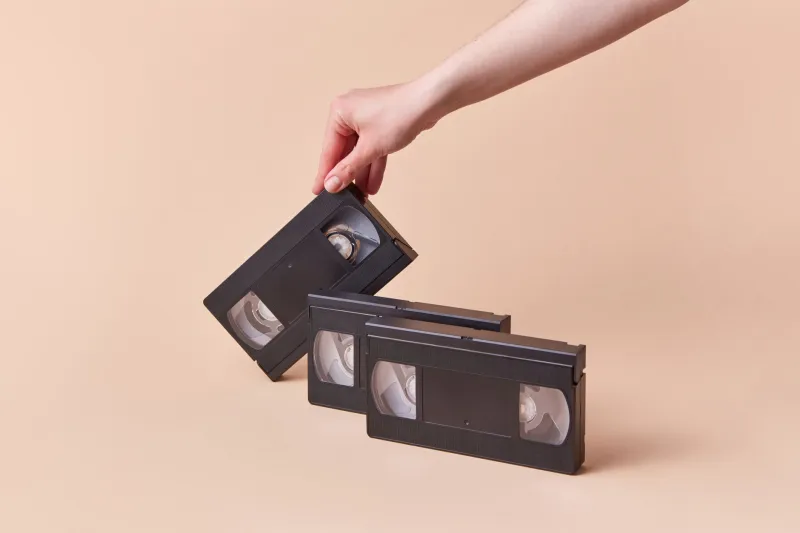
That impulse — the archival impulse — is something Wiltiky readers will recognize. It's the same thing that drives the VHS traders, the pirate radio operators, the people preserving backyard game rules that were never written down. When something exists only in living memory, its guardians start to feel a particular kind of urgency.
The film preservation community has been sounding this alarm for a while. Organizations like the Library of Congress and the Academy Film Archive do critical work saving the prints themselves. But saving a print and having someone who knows how to run it are two different problems. A 35mm print sitting in a vault is an artifact. A 35mm print running through a projector in front of an audience is an event.
The Rooms That Still Have Them
If you want to find working analog projectionists, you look for certain kinds of venues. Repertory cinemas. Film society screening rooms. College campus theaters that never fully modernized. The occasional drive-in that runs 35mm on certain nights for the purists.
Some of them advertise it. Others don't — partly because it's complicated to explain, partly because it sets an expectation that's hard to maintain when prints aren't always available. Film distribution has shifted hard toward digital, and even getting 35mm prints for new releases is mostly impossible now. What these projectionists are running is the archive: classic films, cult titles, retrospectives.
In Chicago, a small theater runs a monthly series they call "From the Platter" — everything shown on 35mm, projectionist visible through the booth window if you know to look. It sells out almost every time. The audience skews younger than you'd expect. A lot of them have never seen film projection before. They show up curious and leave a little reverent.
"They don't have the context for why it's different," says the projectionist there, a thirty-four-year-old named Marcus who taught himself from manuals and older mentors. "But they feel that it is. That's enough."
When the Last Reel Runs Out
Nobody's pretending this ends well, statistically. The projectionists themselves are clear-eyed about it. Machines break down and parts aren't manufactured anymore. Prints deteriorate. The pool of people who know how to maintain the equipment shrinks every year.
What they're doing isn't quite preservation — it's more like continuation. Keeping a thing alive a little longer because it deserves to keep being alive. Because the mechanical act of throwing light through a moving strip of celluloid and landing it on a wall in front of strangers is, by their lights, one of the stranger and more beautiful things humans figured out how to do.
Dennis in Albuquerque puts it simply: "Somebody has to be the last one. Might as well be somebody who cares."
The booth isn't dark yet. Go find the window.