No Sign, No Site, No Problem: The Stubborn Souls Still Running Drive-Ins Off the Grid
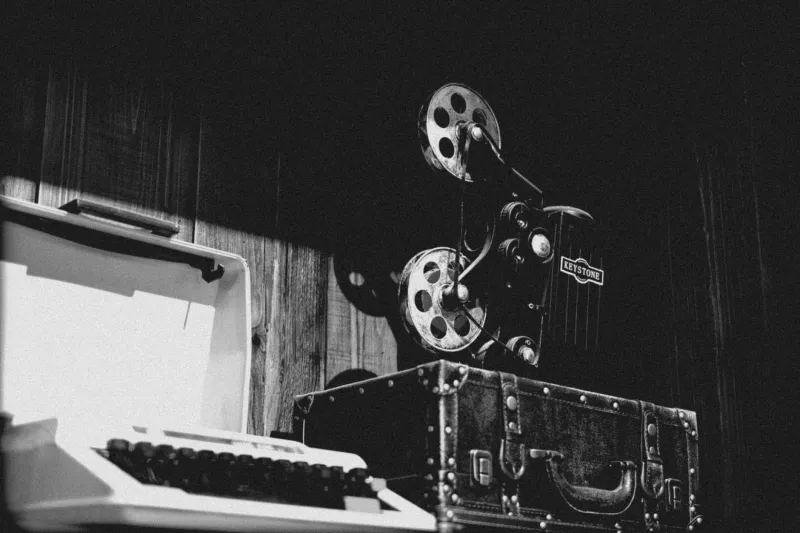
Somewhere in the flatlands east of Tulsa, a man named Gerald has been threading 35mm reels onto a projector he rebuilt himself three times over. He does this every Friday and Saturday night from April through October. There is no website. There is no Facebook page. The phone number, if you have it, rings a landline in a cinder-block booth that smells like popcorn oil and old carpet. Gerald doesn't advertise. He doesn't need to. The same 200 or so cars show up anyway.
This is not a nostalgia act. This is just Tuesday — or rather, Friday — for a loose, unconnected scatter of drive-in operators across rural America who have, intentionally or not, opted entirely out of the attention economy. They run their lots the way their parents or grandparents did: quietly, locally, and with a stubborn indifference to being found by anyone who wasn't already looking.
The Ones Who Stayed
At its peak in the late 1950s, the United States had more than 4,000 drive-in theaters. Today, the commonly cited number hovers around 300 — but that figure only counts the ones that file paperwork, maintain listings on the Drive-In Theater database, and show up in Google Maps results. The actual number, if you could count it, is probably higher. Not by a lot. But higher.
The operators running these shadow lots tend to fall into a few loose categories. There are the inheritors — people who took over from a parent or grandparent and never quite got around to modernizing. There are the stubborn holdouts, old-timers who've watched every other business in their county go digital and simply declined to follow. And then there's a smaller, stranger group: people who made a conscious choice to stay invisible, who view their obscurity not as a failure of marketing but as a feature of the experience itself.
Dorothy, who operates a drive-in on a former soybean field in southern Illinois, falls into that last camp. She converted the land herself in 1991 after buying a used projector at an estate sale and deciding, more or less on a whim, that her county needed a movie night. She never applied for a business license under the drive-in's name. She charges a flat rate per car — cash only, exact change preferred — and the films she screens are whatever she can source through a network of regional film distributors she's been cultivating since the Clinton administration.
"People find out the way people always found out about things," she says. "Somebody tells somebody. That's it. That's the whole marketing plan."
The Equipment Problem
Running a drive-in without institutional support means solving every problem yourself, usually with parts that no longer exist. The projectors favored by these operators — older carbon arc and xenon lamp models — haven't been manufactured in decades. Replacement bulbs are increasingly rare. Circuit boards get cannibalized from machines purchased off Craigslist or salvaged from theaters that closed in the '80s and '90s.
Gerald, the man in Oklahoma, estimates he has the equivalent of three full projectors spread across two working machines. "It's all the same projector at this point," he says. "Just different generations of itself."
Digital cinema conversion, the transition that effectively ended the traditional drive-in era for many operators in the early 2010s, never reached these places — partly because of cost, partly because of stubbornness, and partly because the films they show don't always come through the channels that require it. Some operators screen older titles still circulating on 35mm prints. Others have developed relationships with distributors willing to work outside the standard booking system. A few show films of genuinely uncertain licensing status and prefer not to discuss the specifics.
The Word-of-Mouth Infrastructure
What's remarkable, when you spend time talking to the regulars at these places, is how robust the informal distribution network actually is. People don't stumble onto these drive-ins. They get brought. A coworker mentions it. A cousin from two towns over passes along a phone number. Someone's uncle has been going for thirty years and finally decides you're trustworthy enough to invite.
This creates a kind of social gatekeeping that isn't hostile — nobody's being kept out for ideological reasons — but it does mean the audience self-selects. The people who show up tend to be locals with long roots in the area, or curious outsiders who've earned someone's trust. The experience has a texture that's hard to manufacture: the sense that you're somewhere you weren't supposed to find, watching something that wasn't supposed to still exist.
Dorothy describes her regulars as "the same families, different sizes." She's watched kids she knew as toddlers show up with their own toddlers. She's held screenings the week after funerals for longtime regulars, at the request of their families. The drive-in has become, without anyone planning it that way, a kind of community institution — one that exists entirely outside the systems that usually define community institutions.
Resistance or Refusal?
It's tempting to read these operators as making a philosophical statement. The discourse around the attention economy is loud right now, and there's a certain romance in the idea of a gravel-lot projectionist as accidental prophet of unplugged living. But most of them resist that framing.
"I'm not trying to prove anything," Gerald says. "I just don't want to deal with the internet."
Dorothy is more reflective. She acknowledges that the invisibility has become part of the value proposition, even if that wasn't the original intent. "If everybody knew about it, it wouldn't be the same thing," she says. "Part of what makes it feel like something is that it's not for everybody."
That tension — between preservation and exclusion, between authenticity and gatekeeping — doesn't resolve neatly. These places are genuinely special, and their specialness is partly a function of being hard to reach. Whether that's a spiritual stance or just a practical side effect of never hiring a web developer is probably a question without a clean answer.
The Frequency They're Holding
What strikes you, talking to people who've been to these places, is how consistently they describe the experience in terms that have nothing to do with film. They talk about the dark. The bugs. The sound coming through a window-mounted speaker or, in some cases, a low-power FM frequency you tune to on your car radio. The way the screen looks against whatever sky is happening that night.
These are not cinephiles making a pilgrimage to see a specific movie. They're people who showed up because someone they trusted told them to, and they found something that felt — against all reasonable expectation — like it was still alive.
Gerald's lot doesn't have a name. Dorothy's does, technically, but she doesn't use it much anymore. "People just call it the drive-in," she says. "Like there's only one."
For the people who know about it, there kind of is.