Dubbed in the Dark: Inside the Underground Network Still Trading VHS Tapes Nobody Was Supposed to Keep
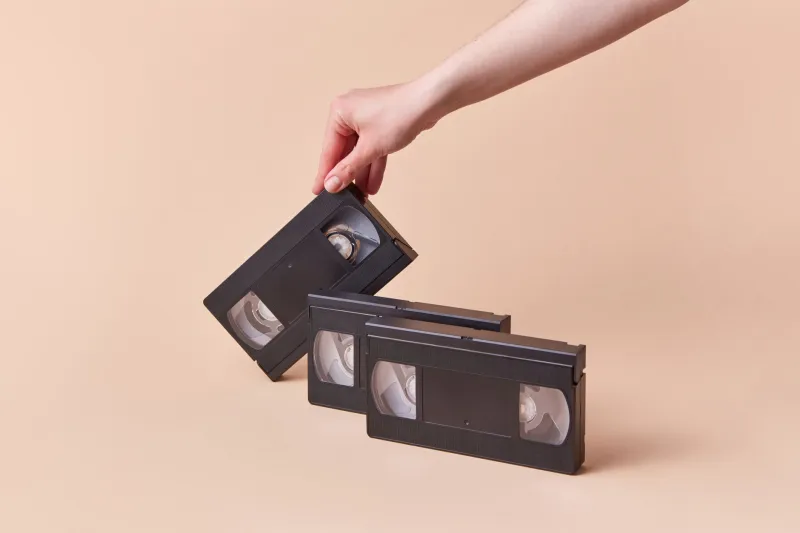
Somewhere in central Ohio, a guy named Marcus has a storage unit that smells like old rubber and magnetic dust. He's got somewhere north of four thousand VHS tapes stacked floor to ceiling on metal shelving he bolted together himself. Most of the labels are handwritten. A lot of them are wrong — the title on the spine doesn't match what's actually on the tape, because whoever dubbed it in 1991 grabbed the nearest empty case and didn't care about accuracy. Marcus doesn't mind. He's memorized most of them anyway.
He's been trading tapes since the mid-nineties. He has no plans to stop.
"People think this is nostalgia," he says, and you can hear the mild irritation in his voice even over a scratchy phone connection. "It's not nostalgia. I'm not doing this because I miss the nineties. I'm doing this because half of what's on these tapes doesn't exist anywhere else. You pull the tape, it's gone."
The Shadow Economy That Predated Streaming
Before the algorithm, before the platform, before anyone used the word "content" without irony, there was the tape tree. The concept was simple and almost elegant: one person with access to something rare — an out-of-print foreign film, a regional horror flick that played drive-ins for two weeks in 1983, a bootleg concert recording, a TV broadcast nobody thought to archive — would copy it and send it to someone else, who'd copy it and send it further down the line. PO boxes. Handwritten catalogs mailed in envelopes. Trust built slowly, reputation earned through the quality of your dubs and the honesty of your lists.
This wasn't piracy in the way most people think about piracy. It was preservation dressed in legally ambiguous clothing. Studios weren't going to release this stuff. Distributors had moved on. The only people who cared were the people who cared obsessively, and they built their own infrastructure around that obsession.
The internet changed the mechanics but not the culture. Forums replaced mailed catalogs. Email replaced PO boxes. But the core of it — the trust networks, the hand-to-hand exchange, the sense that you were part of something that existed specifically because mainstream channels had failed — that stayed intact. And for a certain segment of the community, so did the physical tapes.
Why the Friction Is the Point
Ask anyone deep in this world why they don't just rip everything to hard drives and be done with it, and you'll get a version of the same answer: some of them do, but that's not entirely the point.
There's a woman in the Pacific Northwest — she goes by Delphine online, won't give her real name, has been doing this for about twenty years — who describes the physical tape as a kind of proof of chain of custody. "When I get a tape from someone, I know it passed through human hands to get to me," she says. "Someone made a decision to copy this thing. Someone addressed an envelope. There's a whole history in that object that a digital file just doesn't carry."
That friction — the waiting, the corresponding, the building of relationships before anyone sends anything — creates a vetting system that's surprisingly effective. You don't get access to the good stuff until you've demonstrated that you're serious. You demonstrate seriousness by trading something of value first, by showing up consistently, by not being weird about it. The community polices itself because it has to. There's no platform to report bad actors to. There's no dispute resolution. You just stop trading with people who burn you, and you tell others.
It's a reputation economy running on magnetic tape and mutual trust.
What's Actually on the Tapes
The catalog of what circulates through these networks is genuinely staggering. Regional horror films that got regional theatrical releases and nothing else — movies shot in rural Georgia or suburban New Jersey that played a handful of theaters and then vanished. Japanese pink films from the seventies that never got Western distribution. Italian genre cinema in uncut versions that the sanitized domestic releases stripped apart. Public access television from the eighties that captured entire subcultures that have since disappeared. Ethnic broadcasting — programming made for specific immigrant communities in specific American cities that documented a version of American life nobody thought was worth archiving.
Marcus pulls a tape from the middle of a stack and reads the label out loud: Filipino action, 1987, English dub, SP mode, fair quality. He has no idea who originally recorded it or where it came from. He got it from a guy in Texas who got it from a dealer who used to run a stall at a swap meet in Los Angeles in the late nineties. That's as much provenance as most of these things have.
"Film historians would lose their minds over some of this stuff," he says. "And they don't know it exists. That's the thing. There's no inventory. There's no catalog. It's all just floating around in people's storage units."
The New Guard
The surprising part is that the tape trading world isn't only aging collectors clinging to a dying practice. There's a younger generation filtering in, people in their twenties and early thirties who came up on streaming and found it suffocating. They wanted something the algorithm couldn't give them — genuine obscurity, the feeling that what they were watching was theirs in some meaningful way because they'd worked to find it.
Delphine says she's noticed the influx. "They come in thinking it's going to be like hunting for vinyl," she says. "And it's not. Vinyl has a market. There are stores. There are price guides. This is different. This is more like... you're trying to find something that doesn't officially exist. You have to learn to navigate something that has no map."
The learning curve is steep. The communities are hard to find if you don't know where to look — and most of the serious ones are deliberately off the public internet, accessible through invitation only, operating through private forums or encrypted messaging groups. The gatekeeping isn't elitism, or not only elitism. It's a survival mechanism. Attention is bad for this kind of thing.
What Gets Lost When Nobody Cares
The urgency underneath all of this is real. Magnetic tape degrades. Every generation of copying loses quality. The machines that play these tapes are themselves aging, and the people who know how to repair them are a dwindling population. The window for preserving what's on some of these recordings is genuinely closing.
Marcus knows this. He's started digitizing his collection, slowly, on a setup he built himself. It takes time. It takes money. He does it because the alternative is watching decades of someone else's obsessive preservation work turn to dust in a storage unit in Ohio.
"Nobody's going to do this for us," he says. "The studios aren't coming back for this stuff. The archives don't have the budget. It's us or it's nobody."
He pulls another tape off the shelf. The label says horror, midwest, 1979, unknown title. He doesn't know what it is. He's never watched it. But he's not getting rid of it either.
Some things are worth keeping just because they exist.