Sovereign Lanes: The Rogue Bowling Leagues Writing Their Own Rulebooks — And Winning
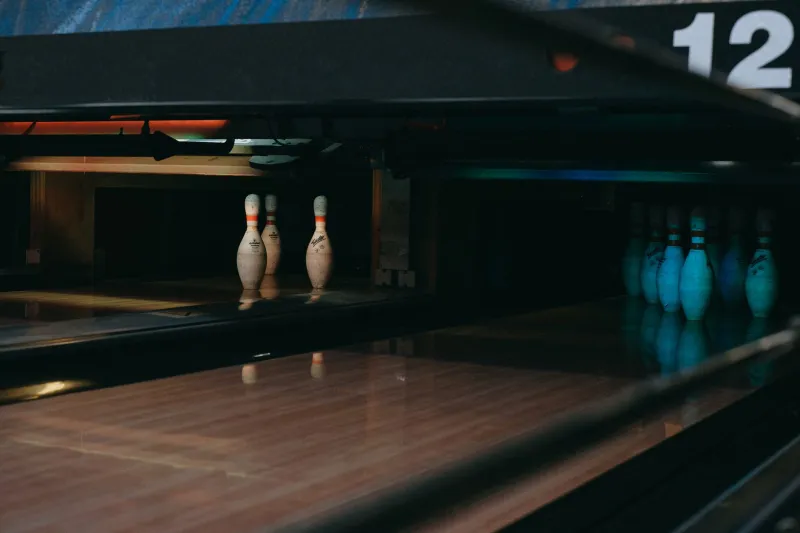
Somewhere in eastern Ohio, in a twelve-lane alley that smells like rental shoe spray and popcorn grease, a man named Gerald is doing math in a spiral notebook. He's been doing this math — the same basic arithmetic, adjusted for personal quirks and local legend — every Thursday night for going on thirty-one years. Gerald is a scorekeeper. Not the digital kind. Not the kind that answers to a national organization with a logo and a liability waiver. Gerald answers to the Millbrook Tuesday-Thursday Mixed League, which meets on Thursdays, always has, and nobody remembers why Tuesday is in the name.
"We tried to change it once," he says, not looking up from the notebook. "People got upset. So we kept it."
This is how things work in the world of independent bowling leagues — a sprawling, quietly defiant network of local operations that has been running parallel to sanctioned bowling culture for generations. They don't need the United States Bowling Congress. They don't need standardized lane conditions or official certification. What they need is a functioning pinspotter, a decent bar menu, and enough regulars to fill four teams by seven o'clock.
The Constitution of the Alley
Every independent league has what its members would loosely describe as rules, though the word barely covers it. These are living documents — sometimes literally, scrawled on laminated sheets taped to the scorer's table — that have been amended, argued over, and occasionally torn up and restarted from scratch. They cover everything: how handicap is calculated (and it is almost never calculated the standard way), what happens when someone bowls out of turn, whether a split conversion counts double in the final frame during a playoff, and crucially, who gets to decide when the rules need changing.
In a Tucson alley that's been operating under the same family ownership since 1974, the league's handicap system uses a base score of 220 instead of the more common 200 — a decision made in 1989 by a guy named Hector who thought the standard formula was "too easy on the big guns." Hector has been dead for six years. The formula remains.
"Nobody's going to touch Hector's system," says the current lane owner, his daughter Carmen. "That would be like repainting a church."
This is the thing about these leagues that's hard to explain to people who haven't lived it: the invented traditions feel sacred in a way that official rules simply don't. When a rule comes from a committee in a distant city, it's a regulation. When it comes from Hector, it's heritage.
Trophy Season Is Its Own Religion
If you really want to understand what's at stake in these leagues, watch what happens around trophy season. Most independent operations run their own end-of-year tournaments with prize structures that make zero financial sense and trophies that are, frankly, incredible. We're talking custom fabrications — not the generic bowling-figure-on-a-marble-base stuff you'd order from a catalog, but actual commissioned pieces. One league in rural Tennessee has a perpetual trophy that's been added to every year since 1981, a kind of sculptural accretion of small plaques and dangling medallions that now stands nearly four feet tall and lives in a glass case near the snack bar.
"We had to reinforce the shelf," admits the league secretary, a retired school librarian named Donna. "But nobody's suggesting we start over."
The tournaments themselves follow formats that exist nowhere in any official bowling literature. Double-elimination brackets with a "mercy round" for first-time losers. Scotch doubles formats where partners switch every third frame. One league in the Pacific Northwest runs an annual "blind draw" tournament where team rosters are randomized the night of — a format designed specifically, its founders claimed, to prevent the two guys who bowl 220 averages from teaming up and ruining everyone's fun.
Holding the Line Against the Franchise
The context here matters. Corporate bowling has been consolidating for years. Big-box entertainment centers with black lights, craft cocktails, and digital scoring systems have absorbed or outcompeted dozens of traditional alleys across the country. The ones that remain — the genuine, slightly-worn, community-rooted operations — are increasingly rare, and the leagues that call them home know it.
What's interesting is how the independence of these leagues functions almost as a preservation mechanism. When you've built thirty years of custom rules and living trophies and Hector's handicap formula, you have a reason to show up that no franchise can replicate. The bowling itself almost becomes secondary to the ecosystem around it.
"I bowl a 147 average," says Marcus, a regular at a Detroit-area independent league who also happens to be one of its most passionate defenders. "I'm not here because I'm good. I'm here because these people know my name and my wife's name and what I do for a living and what I'm going through right now. You can't franchise that."
The scorekeepers, in particular, carry a weight that goes beyond arithmetic. They're the institutional memory. They know who held the record before you, what year the alley almost closed, which rule was added because of that one incident nobody fully explains but everyone references. Gerald, back in Ohio, can tell you the complete roster history of every team in his league going back to 1993. He does not consider this unusual.
What They're Actually Protecting
It would be easy to frame this as nostalgia — a bunch of people clinging to the past because change is scary. But spend a Thursday night in one of these alleys and that reading falls apart pretty quickly. These aren't people frozen in amber. They're people who have built something functional and meaningful and deliberately outside the systems that usually define what's legitimate.
The rogue bowling league is, in its own low-key way, a small act of civic invention. It says: we don't need your approval to make something real. We'll keep score ourselves. We'll make our own trophies. We'll name our handicap formula after a guy who deserved the honor.
And every Thursday — or Tuesday, depending on who you ask — they show up and prove it.