Ring Once, Let It Breathe: The Analog Fan Networks That Refused to Hang Up
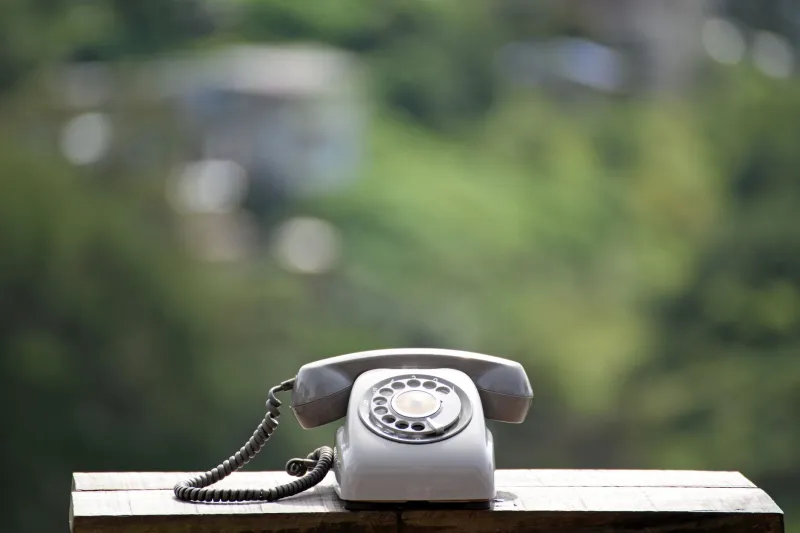
There's a woman in Akron, Ohio who gets a phone call every Saturday evening at 7:15. She's been getting it since 1991. The caller changes — it rotates through a list she keeps handwritten on the back of an envelope taped to the inside of a kitchen cabinet — but the content is reliably the same. They talk about Generations. The NBC soap opera that ran from 1989 to 1991 and was, depending on who you ask, either quietly revolutionary or quietly erased. It was the first American daytime soap with a predominantly Black cast. It was canceled before it found its footing. And for a specific, stubborn cluster of fans scattered across the Midwest and the South, it has never really ended.
"The internet found it eventually," says the woman, who asked to be identified only as Renee. "There are Facebook groups now, a few YouTube uploads, some people digitizing old VHS. But that's not what we are. We were here before any of that. We just kept going."
The phone tree she belongs to currently has 28 active members. At its peak in the mid-90s, it ran closer to 60.
Before the Feed, There Was the Chain
If you came up in a niche fandom before roughly 2004, you probably know the architecture. One person calls two people. Each of those people calls two more. News travels — a cast reunion, a rumor about a reboot, someone found a tape of an episode nobody had — and within a couple of hours, the whole network is buzzing. It was grassroots infrastructure built entirely out of trust and phone bills.
These systems weren't unique to soap opera fans. Regional wrestling circuits ran them. Minor league baseball diehards used them to coordinate when a favorite player got called up or cut. Small-market country music fans tracked the touring schedules of artists who never made the mainstream press. College radio devotees passed along set lists and station frequencies. The phone tree was the dark web of devotion — decentralized, invisible to outsiders, and surprisingly durable.
What's strange, and worth sitting with, is how many of those trees never got cut down. They just kept growing in the dark.
The Conference Call That Starts at 10:45 PM
Every Friday night, somewhere between the final bell and the drive home, a group of about fifteen people who follow the independent wrestling scene in the mid-Atlantic states starts dialing in. The call usually kicks off around 10:45 PM. It lasts anywhere from forty minutes to two and a half hours. There's a loose moderator — a retired postal worker named Gerald from outside Richmond, Virginia — and an unofficial rule that you don't talk over the person doing the card recap.
"We've tried Discord," Gerald says, with the energy of someone who has explained this before. "It's fine for what it is. But when you type something, it just sits there. When you say something, somebody responds. That back-and-forth, that's where the real conversation is. You can hear when somebody's excited. You can hear when they're annoyed. You lose all of that in a chat box."
The group has been running in some form since the early 2000s, originally organized around a specific regional promotion that has since folded. They outlasted the promotion. They outlasted two members moving out of state (both still dial in). They outlasted a period when the whole thing nearly dissolved after a falling-out over a particularly controversial booking decision that Gerald diplomatically declines to revisit.
"We're still here," he says. "That's the whole point."
What the Algorithm Can't Carry
Here's the thing about niche devotion in the internet age: it's simultaneously more visible and more diluted than it's ever been. You can find a subreddit for almost anything. You can find a Discord server for a canceled show from 1987. You can find a Facebook group for fans of a journeyman musician who released two albums on a regional label and then disappeared. The infrastructure is everywhere.
But infrastructure isn't community. And community isn't the same thing as intimacy.
Renee has been in the Generations Facebook group for about six years. She checks it occasionally. She's never posted. "It's people who just discovered it," she says, without bitterness. "Which is great. I love that people are finding it. But they're discovering something. We never stopped living in it. That's a different thing."
The distinction she's drawing isn't about gatekeeping — nobody in these phone networks seems particularly interested in excluding newcomers, though the logistics of adding someone to a phone tree are admittedly more friction-heavy than clicking a join button. It's about continuity. About what it means to have maintained something through the years when nobody was watching, when the cultural moment had moved on, when the algorithms had nothing to surface because there was nothing to surface.
These networks preserved the devotion in amber. The phone kept it warm.
The List on the Inside of the Cabinet
Renee's handwritten call list has changed over the decades. Some people moved and didn't leave new numbers. A few died — she mentions this plainly, with the matter-of-factness of someone who has been keeping track long enough that loss is just part of the ledger. A handful drifted away when their kids got older or their lives got complicated. But new people came in too, usually through word of mouth, usually someone who already knew someone.
"You don't just get added," she explains. "Somebody vouches for you. You have a conversation first. We're not trying to be exclusive, but we're also not trying to be a hotline. It's personal."
That vetting process — informal, human, entirely unscalable — is probably what kept these networks coherent when so many other fan communities fragmented or went quiet. There's no algorithm deciding who sees what. There's no moderation queue. There's no platform that can be acquired, pivoted, or shut down. There's just a list and a phone and a Saturday evening.
Dial Tone as a Love Language
It would be easy to frame all of this as nostalgia — a bunch of people clinging to old habits because they're uncomfortable with new ones. That framing would be wrong. Gerald is on Twitter. Renee uses streaming services. The mid-Atlantic wrestling fans have a group text for quick updates during the week. These aren't people who rejected the internet. They're people who kept something running alongside it because the internet didn't replace what the phone gave them.
What the phone gives them is presence. Breathing, laughing, the slight delay when someone's choosing their words carefully. The specific texture of a voice that's been calling you for fifteen years, or twenty, or thirty. You know when they're tired. You know when they're lit up. You know when something happened in their week that they're not quite ready to talk about but that's sitting underneath everything they're saying.
That's not a feature any platform has shipped yet.
The Generations phone tree will do its call this Saturday at 7:15 PM. Gerald's wrestling roundtable will dial in sometime after the last match. And somewhere, in living rooms and kitchens and parked cars across the country, people who love things the internet never quite understood will pick up the phone, listen for the voice on the other end, and keep the signal alive.