Quarters in the Dark: The Obsessives Keeping Arcade Culture Alive One Cabinet at a Time
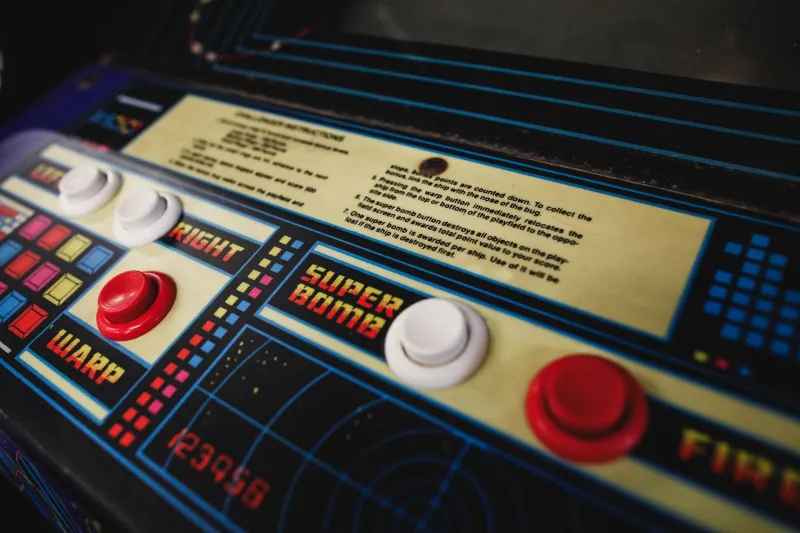
There's a house in suburban Ohio where the garage hasn't fit a car in eleven years. Instead, it holds nineteen arcade cabinets, a vintage change machine that still spits out real quarters, and a hand-painted sign above the door that reads: Play Responsibly. The owner, a former IT contractor who goes by Dex online, opens it to visitors maybe twice a month — no social media announcement, no ticket link, just a text message to a group chat that's been growing quietly since 2014.
"I don't want it to be a business," he says, straightening a marquee on a 1981 Galaga cabinet that took him three months to track down. "The second it becomes a business, it stops being what it is."
What it is, exactly, is harder to define. A museum? A clubhouse? A shrine? All of those feel close, and none of them quite land.
The Hunt Never Really Ends
Arcade culture didn't die so much as it scattered. The big chains folded, the mall locations got converted into cellular phone kiosks, and the machines themselves ended up in the strangest places — storage units in Tucson, chicken coops in rural Georgia, the back offices of defunct bowling alleys in Pennsylvania. For the people who care about this stuff, the hunt is half the point.
Marcelline, who runs a restoration operation out of a converted auto shop in Albuquerque, describes her sourcing strategy as "aggressive patience." She's on three different estate sale mailing lists, checks a handful of regional classifieds every morning before coffee, and has a standing arrangement with a junk hauler who calls her before he crushes anything with a joystick attached.
"Most people don't know what they have," she explains. "They see a big heavy box that doesn't work and they want it gone. I see a Donkey Kong from 1982 that needs a new power supply and six hours of cleaning."
Her shop currently holds twenty-two machines in various stages of restoration. A Ms. Pac-Man cabinet is halfway through a full board recap. A Tron machine sits waiting for a replacement monitor. In the corner, completely finished and ready to play, a Centipede cabinet hums quietly under a single fluorescent light like it's waiting for someone to drop a quarter.
Restoration as Ritual
The technical side of this hobby is no joke. Arcade cabinets from the late '70s through the early '90s run on hardware that nobody manufactures anymore, and the people who understand it are a shrinking community of self-taught engineers, vintage electronics enthusiasts, and obsessives who learned by breaking things and fixing them again.
Dex taught himself to read schematics from PDFs he found on forums that haven't been updated since 2009. Marcelline learned to recap boards — replacing aging capacitors that leak and fail — by watching YouTube videos and then doing it wrong several times until she got it right. Both of them describe the learning curve as steep, humbling, and completely worth it.
"There's something about fixing a board that's been dead for twenty years and hearing the game boot up," Dex says. "It's not like fixing a modern device. It feels more like bringing something back."
That language — resurrection, revival, bringing back — comes up constantly in conversations with people in this world. They're not just hobbyists. They're archivists who happen to work with soldering irons.
The Open Door Policy
What separates the preservation community from standard collecting is the insistence on access. These spaces aren't locked trophy rooms. They're meant to be played.
In Chicago, a woman named Rosario has built what she calls a "neighborhood arcade" in the basement of a three-flat she owns in Pilsen. She charges nothing. She asks only that visitors treat the machines with respect and sign a guestbook she's kept since the first day she opened. The guestbook now runs to four volumes.
"I had a grandmother come in with her grandson last spring," she says. "She hadn't seen a Frogger machine since 1983. She sat down and played for forty-five minutes straight. Didn't say much. Just played." Rosario pauses. "That's the whole reason."
In Portland, a collective of about a dozen collectors has pooled resources to lease a small storefront they rotate between hosting sessions and working on machines. They don't advertise publicly, but they do maintain a Discord server where regulars can check the schedule. Walk-ins aren't turned away, but they're rare — most visitors arrive because someone who's already been there told them about it.
This word-of-mouth infrastructure is intentional. These aren't anti-social spaces, but they're also not trying to compete with the barcade chains that have colonized every mid-sized American city. The vibe is different. Quieter. More focused. The people who show up tend to actually want to be there.
What Gets Lost When Nobody Saves It
Not every machine can be saved. Some are too far gone — water damage, fire, decades of neglect in conditions that stripped the wood and fried the boards beyond practical repair. The preservationist community talks about these losses the way other people talk about demolished buildings or out-of-print books.
"There are games that basically don't exist in playable form anymore," says Marcus, a collector in Atlanta who specializes in rare and regional releases — games that were manufactured in small numbers and distributed only in specific parts of the country. "If the last two or three cabinets are gone, the game is effectively gone. You can emulate it, sure. But the experience of standing at the cabinet, the way the controls feel, the sound coming out of those specific speakers — that's gone."
Emulation is a point of mild contention in the community. Nobody dismisses it outright — it's preserved countless games that would otherwise be completely inaccessible — but the preservationists tend to see it as a supplement, not a substitute. The physical object matters. The context matters. A game running on original hardware in a room full of people who care about it is a different experience than the same ROM file running on a laptop.
Still Running, Still Open
The network is loosely connected at best. There's no central directory, no governing body, no membership card. People find each other through forums, through Discord servers, through mutual friends who mentioned something at a party. The community has its own gravity — once you're in it, you tend to stay.
Dex is already thinking about his next acquisition. There's a Zaxxon cabinet somewhere in Indiana he's been tracking for eight months, currently sitting in the basement of a guy who keeps saying he'll sell it and then doesn't. "I'll get it eventually," he says, without any particular urgency. "These things have a way of working out."
He turns off the lights in the garage as we leave, and for a second the whole room goes dark — nineteen screens blinking off in sequence, the hum fading, the quarters still sitting in the change machine, waiting for whoever comes next.