Dead Scenes, Living Maps: The People Charting Music's Forgotten Geographies
Dead Scenes, Living Maps: The People Charting Music's Forgotten Geographies
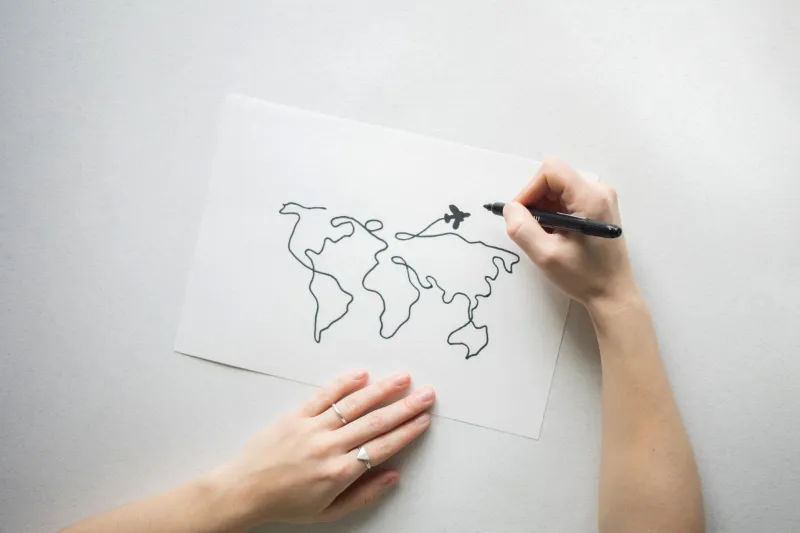
There's a guy in Columbus, Ohio who has spent the better part of three years drawing a map of a music scene that stopped existing before most of his coworkers were born. His name is Derek, he works in logistics during the day, and on weekends he traces the ghost-geography of the mid-90s Midwest emo circuit — the basements, the VFW halls, the diners where bands loaded up on coffee between sets — onto large-format paper pinned to his living room wall.
He's not alone. Not even close.
A Community Built on What's Already Gone
Across the country, a loose and largely self-organized network of music obsessives has quietly taken up a strange new practice: physically and digitally reconstructing the geographic footprints of defunct local music scenes. We're talking about scenes that never made it to a Wikipedia page. The 1990s Midwest emo circuits that fed into — but never quite became — something commercially legible. The Pacific Northwest funk collectives of the early 80s who played to packed rooms that nobody thought to document. The short-lived noise-punk scene that bloomed and died in a four-block radius of a mid-sized Southern city in about eighteen months.
These mapmakers aren't professional historians, mostly. They're people who feel a specific, hard-to-name kind of loss — the loss of a cultural moment they either lived through or just barely missed — and who have found that the act of charting it spatially gives the grief somewhere to go.
"A scene isn't just the music," says Renata, a Chicago-based archivist who has been digitally reconstructing the geography of a late-80s Chicago house offshoot that never got its own genre label. "It's the route you took to get there. It's the fact that the record store was three blocks from the venue, and the after-hours spot was two more. The geography is the scene, in a way. When you lose the places, you lose the connective tissue."
The Tools of the Trade
Ask these mapmakers how they do it and you get a wildly varied set of answers. Some are rigorous, almost academic in their approach. Derek, the Columbus guy, cross-references old zines with city permit records and band interview transcripts, building a database of venues before he ever puts pen to paper. Others are more intuitive — they start with a single memory, or a single conversation, and let the map grow outward from there.
Oral history is the backbone of almost all of it. "You can find a flyer online sometimes," says Marcus, who has been mapping the geography of a defunct Albuquerque psych-rock scene from the early 2000s. "But the flyer just tells you the name of the venue. It doesn't tell you that the venue was in the back of a laundromat, or that it only existed for eight months before the landlord shut it down. That stuff only lives in people's heads."
Marcus has conducted over forty informal interviews with former scene participants, recording them on his phone and transcribing them by hand. He codes them for location references, then cross-checks those against Google Street View, old Craigslist archives, and — when he can find them — local newspaper event listings from the era.
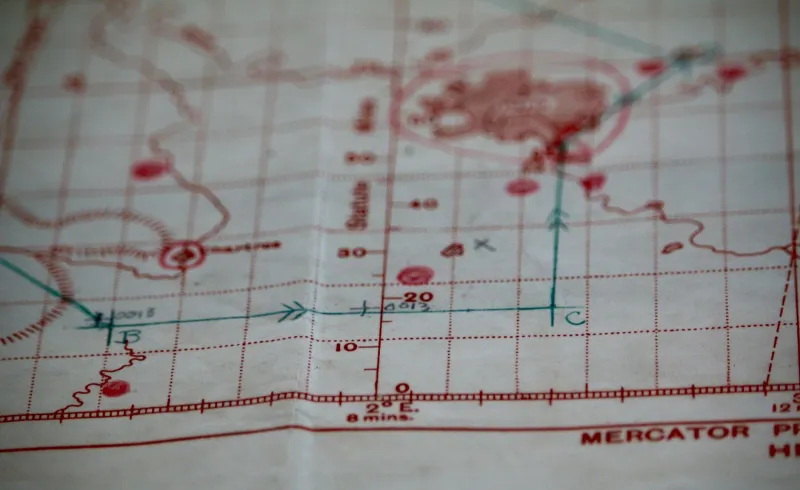
The digital reconstructions often end up in tools like QGIS (free, open-source mapping software) or sometimes just in elaborate custom layers built on top of Google Maps. The hand-drawn versions, though, tend to be the ones that get passed around and photographed and shared in the small Discord servers and subreddits where this community lives. There's something about the physical artifact that resonates.
Why a Map? Why Now?
It's worth sitting with that question for a second, because it's not obvious. Music scenes have been documented in oral histories, in books, in documentaries. Why maps specifically?
Part of the answer is practical. A map lets you see relationships that a timeline or a list can't show you — the fact that two scenes overlapped geographically even if they didn't overlap aesthetically, or that a single block anchored three different subcultures across two decades. "You start to see patterns," Renata says. "You start to see how scenes cluster around certain kinds of infrastructure. Cheap rent, obviously. But also transit lines. Proximity to art schools. It's not random."
But part of the answer is more emotional than analytical. There's something about the act of drawing a boundary — of saying this is where it was, this is how far it stretched — that functions like a kind of acknowledgment. A formal recognition that something real happened here, even if the world moved on without marking it.
"I think a lot of us grew up feeling like the things we cared about didn't count," says Yolanda, who has been working on a multi-layered map of overlapping Baltimore club and hip-hop scenes from the mid-2000s. "Like the stuff that mattered to us locally was always less legitimate than whatever was happening in New York or LA. Making a map is kind of a way of saying — no, this was real. This had a shape. It took up space."
The Ethics of the Archive
Not everyone is comfortable with the project. Some former scene participants find the mapping impulse a little unsettling — like being pinned to a board. A few have pushed back on the idea that their community's geography should be documented at all, especially in cases where the scene's obscurity was partly a feature, not a bug. Some underground spaces survived precisely because nobody was charting them.
That tension is real, and the better mapmakers in this community take it seriously. Marcus says he always reaches out to former participants before publishing anything, and that he's pulled location details at people's request. "It's not my scene," he says. "I'm just trying to understand it. If the people who actually lived it don't want certain things on the map, that's more important than my completionist instincts."
There's also the question of accuracy. Memory is unreliable. Two people who were both present at the same shows will often give you completely different accounts of where things were, how long they lasted, who was central and who was peripheral. The maps that result are always partial, always contested, always a little bit wrong in ways that can't be fully corrected.
But maybe that's appropriate. A map of something as alive and chaotic as a music scene probably should have some fuzz in it. The gaps are part of the document.
Frequency Found
Derek is still adding to his Columbus map. He found a new interview subject recently — a woman who booked shows at a now-demolished venue in 1996 — and she gave him three location references he didn't have before. He's going to have to redraw a whole section.
He doesn't seem bothered by that. If anything, he seems pleased. The map isn't finished. Maybe it never will be. But it's growing, and every new data point is a small proof that the thing he's mourning actually existed.
"People think it's weird," he says. "And yeah, okay, it's a little weird. But so is forgetting. So is just letting it disappear like it never happened."
Out here on the fringe, that's basically a mission statement.