After the Late News: Why Local TV's Goodnight Still Matters
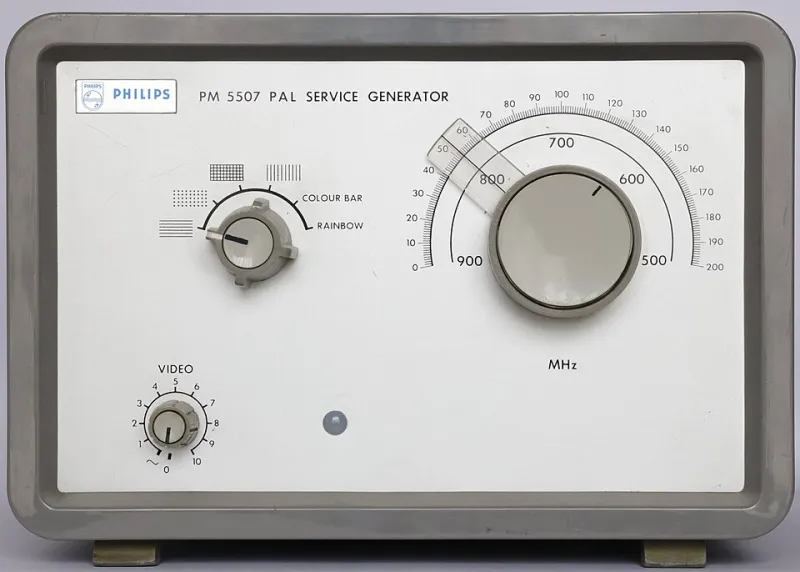
Photo: Alex P. Kok, CC BY-SA 4.0, via Wikimedia Commons
There used to be a moment, after the late news and before the infomercials, when a local station would say goodnight. Not a network. Not a streaming service. A station. It might show a test pattern. It might show a card with the station's call letters and the temperature. It might show an announcer in a cardigan reading a list of school closings that would not matter for another eight hours. Then the signal would go quiet, or switch to a feed, or dissolve into a screen of color bars. The day was over. The town had been dismissed.
That moment is mostly gone. Automation filled the hours. The overnight block became a place for reruns, paid programming, and network feeds. The sign-off is now a curiosity, something you find on YouTube or in a station's archive. But it is worth defending, not because it was better television, but because it was a public ritual. It was the local station admitting that the day had a shape, and that the people watching had been part of it.
The Sign-Off Was a Routine, Not a Genre
The sign-off was never a single format. Some stations ran a test pattern with a tone. Some ran a weather board with the forecast for the next day. Some had an announcer read a poem, a prayer, or a list of farm prices. Some played the national anthem while a flag fluttered on a blue screen. The variation was the point. Each station built its own version of the same idea: we are going off the air, and we are telling you so.
That idea sounds small. It is not. A broadcast day has a beginning and an end. The beginning is easy to forget because it happens while most people are asleep or getting ready. The end is different. The end is when the town is still awake enough to notice. The sign-off was a hand on the shoulder. It said: the news is done. The weather is done. The station is going to rest. You can rest too.
What Gets Lost When the Night Is Automated
Automation is not the villain here. It keeps costs down, fills dead air, and lets small stations survive. But automation has no sense of ceremony. It does not know when the day ends. It does not know that the late news is over. It just keeps going, which is useful for a business and strange for a community.
When a station signs off, it creates a boundary. The boundary is not just technical. It is social. It tells viewers that the public day is over and the private day can begin. That is a small thing, but small things make up the texture of a place. A town with a sign-off feels different from a town with a 24-hour feed. One has a bedtime. The other has a screen that never blinks.
The sign-off also had a particular kind of voice. The announcer was not a network star. He was usually a station employee, someone who had been on the air for years. He sounded like he knew the roads home because he did. He might mention the fog in the valley or the bridge that was still out. He might thank the viewers for watching. He might say the station's call letters like they were a name, not a brand. That voice is worth remembering, not because it was polished, but because it was local.
Civic Texture Is Not Nostalgia
It is easy to turn the sign-off into a nostalgia piece. The color bars, the test pattern, the cardigan, the anthem. But nostalgia is a closed loop. It says things were better then. That is not the argument here. The argument is that the sign-off was a civic ritual, and civic rituals are worth preserving even when the technology that produced them is obsolete.
A town needs places where people can see the same thing at the same time and know that their neighbors are seeing it too. A high-school football game does that. A church supper does that. A local newscast does that. The sign-off did that at the end of the day, when the audience was small and the stakes were low. It was not a mass event. It was a quiet one. But quiet events are part of the civic texture too.
Keep the Goodnight
No one is arguing that stations should bring back the test pattern as a daily practice. The economics do not work. The audience is asleep. But there is room for a small version of the ritual. A minute of local weather. A card with the call letters. A recorded voice saying goodnight. A station could do it without losing an hour of paid programming. It could do it because it is a station, and stations used to say goodnight.
The sign-off was not glamorous. It was not viral. It was not designed to be remembered. That is exactly why it matters. It was a public goodnight from a local institution, and in a media landscape that never stops talking, there is something valuable about a voice that knows when to stop.