The Swap Shop Is the Town Square: AM Radio's Unlikeliest Marketplace
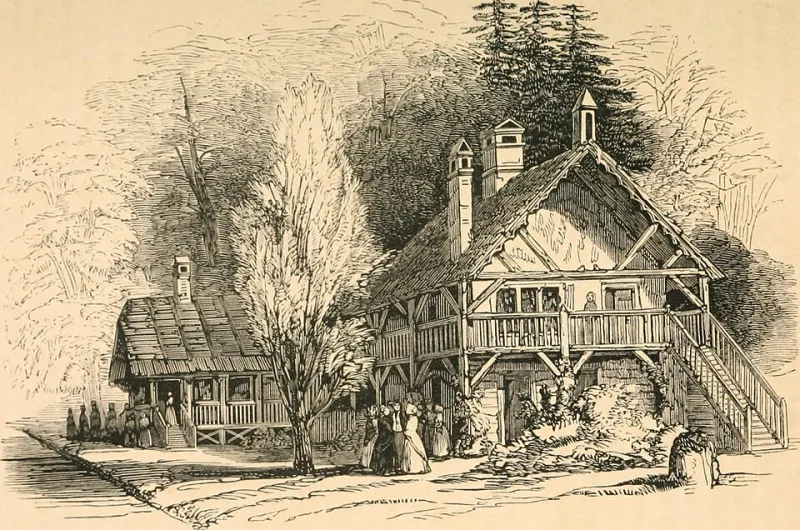
Photo: Internet Archive Book Images, No restrictions, via Wikimedia Commons
On a Tuesday in November 2026, the phone lines at a small AM station in the Missouri Ozarks start lighting up before the coffee has finished dripping. The host, a retired seed salesman named Dale, slides behind a console older than most of his callers and says the same thing he says every weekday morning: 'You are on the swap shop. Whatcha got?'
What follows is not polished radio. It is a town square with a transmitter. A caller reads out a riding mower with a bad belt and a good deck. Another offers a set of church pews to anyone who can haul them. A third wants to trade a half-finished 1987 project car for a working chest freezer and maybe a trailer. Dale takes notes on a legal pad, repeats the phone number twice, and moves on. Between calls, the station cuts to farm reports and a weather update that sounds like it was read by someone who has actually been outside.
This is Tradio, or something close to it. The name varies by market. The format does not. For decades, low-power AM and FM stations have set aside blocks of airtime for listeners to buy, sell, and trade with each other. There are no photos, no seller ratings, no shipping. There is a voice, a price, and a phone number. In a marketplace built for apps, the swap shop should be dead. Instead, it keeps showing up between the grain prices and the obituaries, doing the work of a community bulletin board that happens to be broadcast.
The Lineup Starts Before Sunrise
The best swap shops start early. Farmers are already in the truck. Retirees are on the second cup. The people who run the station know this, so the buy-sell hour often lands right after the 6 a.m. news and right before the market report. It is not prime time in the advertising sense. It is prime time in the local sense.
At a station in eastern Colorado, the host keeps a three-ring binder of regular callers. Some are there every week. Some are there every day. The binder has notes in the margins: who pays cash, who wants to trade only, who will deliver within twenty miles, who has a tendency to describe a vehicle for four minutes before mentioning it does not run. The host does not read these notes on air. He uses them the way a good bartender uses a regular's usual order. He knows when to cut in, when to let a caller ramble, and when to say, 'Let's get the number out again.'
Most stations run the show live. That matters. A recording would be cheaper, but the swap shop depends on the fact that a caller might hear a price and respond to it before the next song. The show is not a listing service. It is a conversation with callers waiting on hold. The theater is in the timing.
The Etiquette of the Open Line
There is an unwritten code to the swap shop, and it is enforced mostly by the host. Say what you have. Say what you want. Give the price or the trade. Give a phone number slowly. Do not hog the line. Do not curse. Do not call back five times to lower your price by ten dollars. If someone beats you to a deal, let it go.
The code is not nostalgia. It is practical. A swap shop is a small public room with no mute button. Everyone can hear you. The regulars know that being easy to deal with is worth more than squeezing the last dollar out of a lawn edger. They also know that the host controls the line. If you are rude, you go to the bottom of the stack. If you are clear, you get called back first.
The callers are not all rural. Some are driving to work in town. Some are listening online. Some are the adult children of people who used the swap shop for years and now need to sell a parent's furniture, a tractor, or a box of tools. The format absorbs all of it because it is simple enough to absorb all of it. You do not need an account. You need a phone.
Why the App Economy Hasn't Killed It
A Facebook Marketplace listing has photos, search, messaging, and a paper trail. A swap shop has none of that. That is the point. The app is better for finding a specific thing in a wide radius. The radio show is better for the things that are too awkward, too heavy, too local, or too strange for a listing. A church pew is a hassle to photograph. A half-finished project car is a hassle to explain. A set of used steel fence posts is a hassle to search for. On the air, you just say it out loud and see who calls.
There is also the matter of trust. Not the blind trust of a stranger on the internet, but the low-grade, repeat-player trust of a small town. The host knows the voices. The callers know the host. If someone misrepresents a lawnmower, the whole listening area hears about it. The swap shop is not a court of law. It is a reputation economy with a weather report.
And then there is the simple fact that a lot of America still lives within range of a small station. The signal may not reach the next county. It does not need to. The swap shop is not trying to be everywhere. It is trying to be here. That is the Wiltiky frequency: the narrow band where people still talk to each other in public, with their names and their phone numbers and their slightly overpriced riding mowers.
A Town Square With a Transmitter
After the last call, Dale reads the closing numbers, thanks the regulars, and reminds everyone that the station will do it again tomorrow. The legal pad is full of scribbles. The coffee is cold. Somewhere out there, a chest freezer is about to change hands. It is not efficient. It is not scalable. It is, for a few minutes each morning, a town square with a transmitter, and that is enough.