Burn, Flicker, Repeat: The Obsessives Still Running 35mm Film the Hard Way
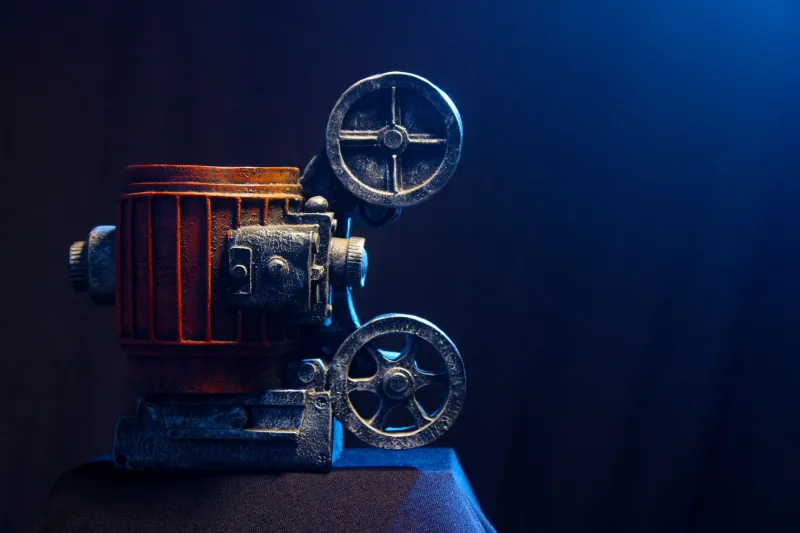
There's a specific sound a 35mm projector makes when it catches. A clatter, then a hum, then something that feels less like a machine running and more like a living thing settling into its rhythm. Most people under thirty have never heard it outside of a YouTube video. A small, quietly fierce community of Americans hears it every weekend — and they wouldn't trade it for anything.
They're projectionists. Or ex-projectionists. Or theater owners who bought a building because it came with equipment nobody else wanted. Some of them trained professionally before the multiplex industry switched to digital around 2013. Others stumbled into it through film school, through obsession, through the specific kind of stubbornness that makes a person spend six hours sourcing a replacement lamp from a warehouse in Ohio. Whatever the path, they ended up in the same place: behind a heavy metal machine, in a room most audiences never see, doing work that the industry decided wasn't worth doing anymore.
Wiltiky has been watching the fringe long enough to recognize when something small is becoming something. This is one of those things.
The Hunt for the Print
Before you can run a 35mm screening, you need a print. That sentence sounds simple. It is not.
Original film prints — the physical reels of cellulose acetate or polyester that were struck from the camera negative and shipped to theaters — exist in a shrinking, scattered ecosystem. Some live in climate-controlled vaults at major archives like the Library of Congress or UCLA Film & Television Archive. Others are stacked in the back rooms of repertory theaters, slowly warping. A significant number ended up in private hands after studios and distributors stopped caring about them.
Operators like Dena Marsh, who runs a 60-seat screening room out of a converted auto garage in Tucson, describe the sourcing process as "part detective work, part estate sale, part begging." She's acquired prints through film swap meets, through estate sales of deceased projectionists, and once through a Craigslist listing that read, simply, "old movie stuff, make offer." That lot included a pristine print of a 1974 Italian horror film she'd been trying to track down for three years.
The condition of what you find is always a gamble. Prints get scratched. Splices fail. Vinegar syndrome — the chemical deterioration that makes old acetate smell sweet and renders it brittle — is a slow death sentence for any reel it touches. Part of the culture around 35mm screening is the repair ritual: cleaning heads, re-splicing torn frames with cement or tape, holding individual frames up to a light source and deciding whether a section is worth running at all.
"You get to know a print," says Marcus Telford, who operates out of a single-screen theater in rural Vermont he's been running since 2009. "You know where it's going to skip. You know which reel has that one bad splice around the forty-minute mark. You compensate for it. You work around it. It's a relationship."
The Ritual of Threading
Ask any working projectionist what they love about the job and they'll eventually get to threading — the process of manually routing the film through the projector's gate, around the sprocket wheels, through the sound head, into the take-up reel. It takes maybe three minutes if you know what you're doing. It takes considerably longer when you're learning.
There's no digital equivalent to this. No streaming platform requires you to physically handle the content before it plays. The tactile intimacy of 35mm — holding the actual frames, feeling the weight of a full reel, smelling the faint chemical bite of old stock — is something these operators cite over and over as the reason they do it.
"When I'm threading, I'm touching the same film that somebody touched in a projection booth in 1987," says Carla Voss, who runs monthly screenings out of a bar in Minneapolis. "That's not nothing. That's actually kind of everything."
Voss started hosting screenings after a career in graphic design left her feeling disconnected from anything physical. She bought a projector from a closing theater in Wisconsin for eight hundred dollars, watched approximately forty hours of instructional videos, and burned through two prints learning the hard way before she felt confident enough to invite an audience.
Her screenings now sell out. She charges a sliding scale admission and doesn't take requests. The print she runs is the print she runs.
Why the Imperfections Matter
This is the part that confuses people who haven't experienced a 35mm screening in person. The scratches. The occasional flicker when a reel change doesn't go perfectly. The brief moment of white light when a frame tears. For the uninitiated, these feel like failures. For the community around analog film, they're the point.
Digital projection is technically perfect and experientially inert. It delivers exactly what it promises, every time, with zero deviation. A 35mm print delivers a performance. It has history baked into it — every previous screening leaves a trace, a micro-scratch, a subtle shift in color density. Watching a well-traveled print is watching an object that has lived.
"People ask me why I don't just get a DCP," says Telford, referring to the digital cinema packages that replaced film prints in most theaters. "I tell them: because a DCP has never been anywhere. It has no story. My print of this movie has been to fourteen cities. It has a scratch in reel three that I think happened in Detroit. It's been somewhere. You can feel that."
A Subculture in the Making
What's interesting about this community isn't just that it exists — it's that it's starting to develop the markers of a genuine subculture. There are informal networks where operators trade prints and share sourcing tips. There are weekend workshops where veteran projectionists teach threading and maintenance to newcomers. There are group chats, email lists, and the occasional regional meetup where people show up with equipment and argue passionately about lamp alignment.
None of it is organized in any formal sense. There's no association, no certification body, no official directory of who's doing this and where. It spreads through word of mouth, through film festival hallways, through the specific social gravity of people who care intensely about the same obscure thing.
That's how the fringe usually works. Someone starts doing something because they can't not do it. A few others recognize themselves in it. The thing grows just enough to sustain itself without ever quite going mainstream.
The projector hums. The reel turns. The light hits the screen and something imperfect and irreplaceable plays out in a room full of people who came specifically for the imperfection.
That's the frequency. You either hear it or you don't.