Knock Twice, Ask for Nobody: The Quiet Return of Bars You Have to Earn
The Night You Almost Didn't Get In
Somewhere in a mid-sized American city — let's say you're walking through a neighborhood you only half-know — there's a door. It looks like nothing. Maybe it's painted the same color as the brick around it. Maybe there's a small buzzer with no label. You were told to knock twice, say a name, and not to bring more than three people. You were also told, very clearly, not to post about it.
This is not a movie set. This is Tuesday night in 2025, and the speakeasy is back — quieter, weirder, and more sincere than its Prohibition-era ancestor ever had the luxury of being.
Across the country, a loose network of bars and drinking rooms has been quietly operating outside the usual ecosystem of Yelp reviews, cocktail influencers, and curated ambient playlists designed to look good on Instagram Stories. These places have rotating passwords, phone-only reservations (sometimes just a text to an unlisted number), and physical addresses that circulate through word of mouth like a secret people actually want to keep.
Why Now?
The timing makes a certain kind of sense. For the better part of a decade, the American bar experience got increasingly optimized for the camera. Neon signs positioned above the bar specifically for selfies. Cocktail menus designed around color and garnish before flavor. Velvet ropes that exist not to manage capacity but to manufacture a sense of arrival.
At some point, the performance started to feel exhausting.
"People came in and spent the whole night documenting instead of drinking," says one bartender who now works at an unlisted venue in Chicago's Pilsen neighborhood. He asked that neither his name nor the bar's be published — which, honestly, is kind of the point. "You'd watch someone spend forty minutes getting the right angle on a Negroni. At some point I thought, what if we just... didn't allow that?"
What started as a vibe preference has turned into something closer to a philosophy. The bars operating in this space aren't just anti-Instagram. They're making a deliberate argument about what a good night out should feel like — and they're doing it by removing almost every signal modern nightlife uses to communicate value.
No Sign, No Algorithm, No Problem
The mechanics vary by venue. Some use a weekly password distributed through a private text chain. Others require a brief conversation with someone who's already been, almost like a vouching system. A few operate with no formal reservation process at all — you either know the timing or you don't. One bar in New Orleans reportedly changes its entrance location on a rotating basis, with regulars getting a map update via a group chat that new members can only join by invitation.
None of this is about being precious. Talk to the people running these spots and they'll tell you the same thing: the friction isn't the feature, it's the filter. When someone works even a little to get through the door, they show up differently. They're present. They talk to strangers. They order something they've never tried before because the menu doesn't have photos and the bartender is right there.
"The password isn't about making people feel special," explains a woman who runs a rotating underground bar night out of a rented basement space in Philadelphia. "It's about making sure the room has the right energy. People who found us by accident or put in the effort to track us down — those are the people who make the night."
The Atmosphere Is the Point
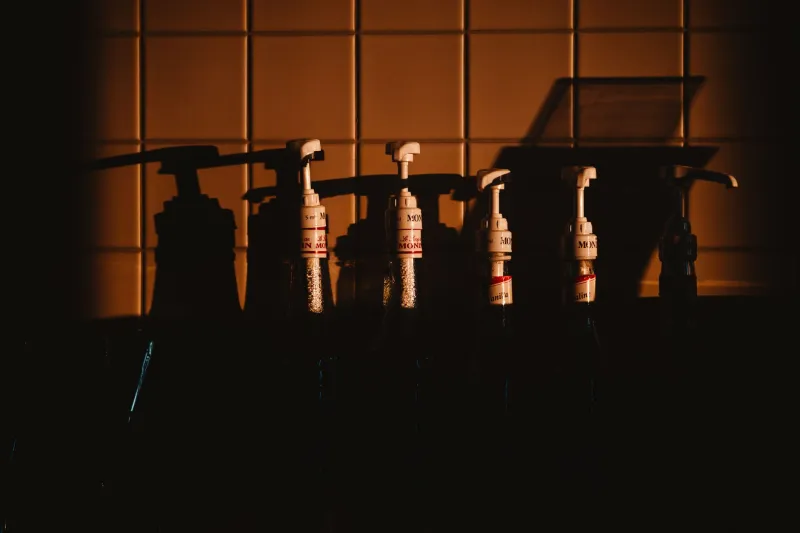
Step inside one of these places and the contrast with your average cocktail lounge is immediate. Lighting tends toward actual low-light rather than the carefully calibrated warm glow that looks great in photos but feels artificial in person. The music is usually something specific and opinionated — vinyl, often, or a DJ who clearly has a point of view. Conversations are louder because people are actually having them.
The drinks are often excellent, but that's almost secondary. What these bars are really selling is a particular quality of experience — one that feels slightly outside the normal flow of documented, optimized, monetized city life.
There's something almost nostalgic about it, though not in a cosplay way. It's less about recreating the 1920s and more about recovering something that got lost somewhere in the last ten years. The idea that a place could just exist for the people in it, without needing to broadcast its existence to anyone else.
The Community That Builds Around Secrets
One of the stranger side effects of this movement is how tight-knit the regulars get. When you find something good through a chain of trust — a friend tells a friend tells you — you feel a sense of investment that's hard to manufacture any other way. You're not a customer who wandered in off Yelp. You're part of something that depends on everyone keeping it going.
That communal sense extends to how people talk about these places. Or, more accurately, how carefully they don't. There's an unspoken code around what you can share and with whom. People will tell a close friend. They won't post. The password economy only works if the password stays rare.
Which creates a genuinely interesting social dynamic in an era when sharing is basically the default mode of experiencing anything. Choosing not to post about something — not because you didn't enjoy it but because you want to protect it — is, for a lot of people, a genuinely novel feeling.
Getting In Is Half the Night
Here's the thing nobody tells you until you've done it: the moment before you knock on an unmarked door, not entirely sure you have the right address, is actually kind of thrilling. Your phone is useless. You can't check a review. You're just standing there, relying on the information someone trusted you with.
That small jolt of uncertainty is, apparently, exactly what a lot of people have been missing. The velvet rope was never really about exclusivity — it was about the feeling of arrival, of being somewhere that required something of you. These bars figured out how to deliver that feeling without the theater of it. No bouncer with a clipboard. No line of people performing patience. Just a door, a knock, and whatever's on the other side.
Some nights it's a room full of strangers who become, by last call, something closer to friends. Other nights it's quieter, more intimate. Either way, you probably won't post about it.
And honestly? That might be the best part.