Warm Wax, Weird Grooves: The Backyard Record Pressers Making Vinyl Nobody Asked For — and Everyone Wants
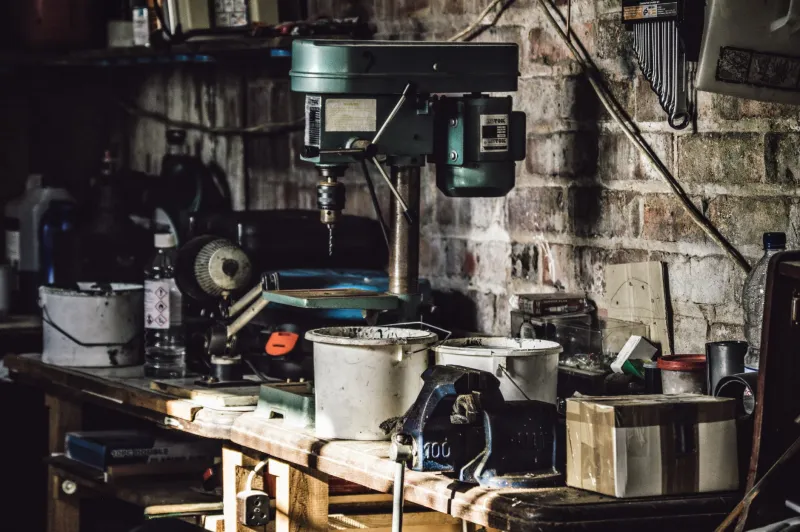
Somewhere outside of Knoxville, in a barn that still smells like the horses it used to house, a 1970s-era hydraulic record press is producing forty copies of an album by a noise musician who lives in Chattanooga. The pressing plant, if you want to call it that, is run by a retired electrician named Gary who bought the machine at an equipment auction in 2019 for less than most people spend on a used car. He had no idea how to use it. He figured it out.
"The manual was mostly in German," Gary says, wiping down the press after a run. "But machines aren't that complicated once you stop being scared of them."
The forty copies he's producing today will be sold through the musician's website, handed out at shows, and traded with a small circle of collectors who specifically seek out small-batch pressings. They'll have surface noise. Some will have minor defects. The labels will be slightly off-center on a few. None of this is considered a problem. In some corners of the collector world, it's considered the point.
How You End Up Running a Vinyl Press in a Barn
The path to operating a record press outside of an industrial facility is rarely straightforward. The machines — mostly manufactured in the 1960s and 70s by companies like Toolex-Alpha, Lened, and Finebilt — were built for factory environments, and most of them ended their working lives in commercial plants that closed during the CD era. They ended up in storage, in warehouses, occasionally in the hands of people who had no clear plan for them.
Over the past decade, as vinyl demand surged and commercial pressing plants developed backlogs stretching six months to a year, a small number of determined hobbyists and entrepreneurs started acquiring this old equipment and learning to run it. The learning curve is steep. The machinery requires constant calibration. The vinyl compound — a specific formulation that has to be heated, compressed, and cooled in a precise sequence — is finicky in ways that took most small-batch pressers months to understand.
But the results, when everything works, are records. Real ones. Playable on any turntable.
The People Running These Operations
They're a scattered, loosely connected group. Some found each other through online forums, though many are reluctant to share too much publicly about their setups — partly to avoid being overwhelmed with requests, partly because some of the machinery they're operating exists in regulatory gray areas that they'd rather not examine too closely.
Tamara runs a pressing setup in her detached garage outside of Olympia, Washington. She came to it from a background in ceramics, which she says prepared her better than any technical training would have. "Both are about understanding heat and material," she explains. "You develop a feel for when something's right. You can't just read the numbers."
Tamara presses runs of fifty to two hundred copies, working primarily with experimental and ambient musicians who can't get commercial plant time — or who've decided they don't want it. Her pricing is based on run size and complexity, and she maintains a waiting list that's currently several months long.
In rural Minnesota, a former sound engineer named Del converted a detached workshop into a pressing space after acquiring a Lened press from a closed Canadian plant. He focuses on what he calls "document pressings" — records made to capture local music scenes that would otherwise go unrecorded. He's pressed albums for a bluegrass collective, a Hmong hip-hop group from the Twin Cities, and a collection of field recordings made at county fairs across the upper Midwest.
"These aren't records that were going to get made otherwise," Del says. "The commercial plants aren't interested in a run of seventy-five copies for a band with a hundred local fans. But that music deserves to exist on something physical."
The Collector Side of the Equation
For the people buying small-batch pressings, the appeal operates on several levels simultaneously. There's the scarcity — a run of forty or seventy-five records is, by definition, a limited artifact. There's the relationship with the music itself, which often comes directly from the artist or through a personal connection rather than through a retail chain. And there's something else, harder to articulate, about the physical character of a small-batch pressing.
Commercial vinyl plants optimize for consistency. Every copy in a run should be as close to identical as possible. Small-batch pressers, working with older equipment and smaller margins for error, produce records that vary. The surface noise differs from copy to copy. The weight isn't always exactly the same. Occasionally a pressing has a visual imperfection — a bubble, a slight warp, a label that didn't sit quite flat.
For collectors who've grown up in an era of perfect digital reproduction, these variations aren't flaws. They're evidence of a physical process, proof that the object was made by a person with a machine, not reproduced by a system.
"I can hear Gary's barn in these records," says one collector in Nashville who buys regularly from small-batch pressers. "I don't mean that metaphorically. The room tone is in there. The imperfections are in there. It's a document of a specific place and moment, not just a delivery mechanism for audio."
The Machinery That Makes It Possible
The old presses, for all their age, are remarkably durable. Built to run in industrial environments for decades, they were overengineered in ways that make them surprisingly maintainable by people who are willing to learn. Parts are scarce but findable — a small community of machinists and salvage specialists has developed around keeping this equipment running.
Gary has replaced nearly every rubber component on his press and fabricated several metal parts himself. He keeps detailed notes on every pressing run, tracking temperature, pressure, and cycle time, building a body of knowledge that he's started sharing with others who've acquired similar equipment.
"I'll help anyone who asks," he says. "This knowledge shouldn't disappear. These machines shouldn't stop running just because the industry moved on."
He loads the next batch of vinyl compound, sets the temperature, and waits for the press to come up to heat. In about forty minutes, there will be more records in the world that didn't exist this morning. Forty copies of something made by two people — one with a song, one with a barn and a machine — that will end up in forty different places, carrying a small piece of a specific moment forward into whatever comes next.
Not a lot. But enough.