Living Inside the Story: Meet the Americans Who Built Their Own Mythologies and Moved In
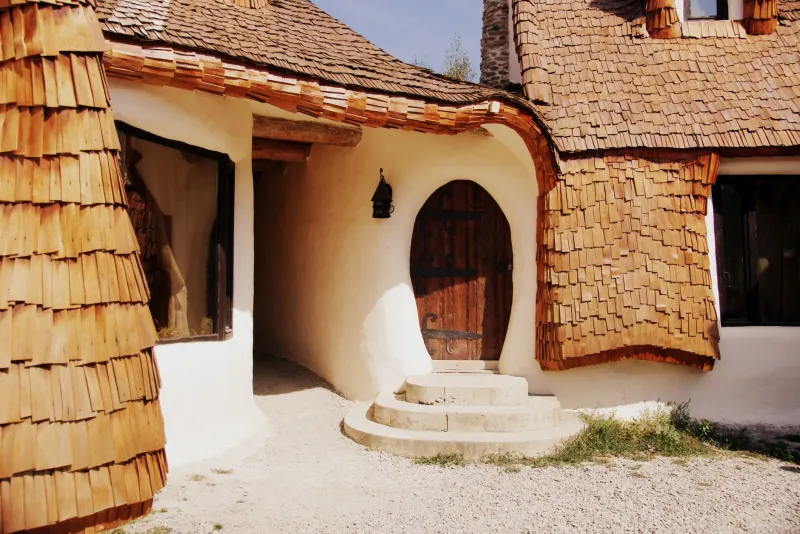
Somewhere in the rural mid-Atlantic, there's a cluster of homes that looks like it was lifted from a fever dream about medieval England filtered through a '70s fantasy novel. The residents grow their own herbs, observe a loose calendar of seasonal festivals, and refer to their community by a name that doesn't appear on any county map. New visitors are rare. Permanent ones are rarer still.
This isn't a Renaissance faire. Nobody goes home at the end of the weekend.
Across the US, a small but quietly persistent movement of people has been doing something genuinely unusual: building environments themed around specific aesthetic mythologies — retro-futurist utopias, folkloric village settings, pre-industrial fantasy worlds — and then actually living inside them. Not as a hobby. As a life.
The Architecture of a Chosen World
The impulse isn't new, exactly. Intentional communities have existed in America since the 1800s, from utopian religious settlements to back-to-the-land communes. What's different about this particular wave is the specificity of the fictional frameworks involved. These aren't communities organized around shared politics or religion in the traditional sense. They're organized around shared aesthetics, shared narratives, shared imaginative commitments.
One such place — its residents prefer not to have it named in press, a preference we're respecting — exists in the Pacific Northwest and operates on what its founders describe as a "diesel-punk" philosophy. The homes are built to evoke an alternate-history 1930s industrial aesthetic: riveted metal accents, amber glass, mechanical fixtures that look functional even when they're purely decorative. Residents have agreed on a set of design guidelines that govern exterior appearances, communal space aesthetics, and even the kinds of vehicles parked in shared areas. Vintage trucks and modified older cars are strongly preferred. A brand-new SUV would be, one resident explained in an online interview, "a kind of rudeness."
Another community in the American Southwest has built around a vision of a pre-contact Indigenous-inflected pastoral world — though its residents are careful to note this is their own invented mythology, not a claim to any specific cultural heritage. Homes are adobe-style, the community calendar follows agricultural rhythms, and there's a shared oral tradition of stories that have been written, refined, and passed down over the community's thirty-year history.
The Rules That Hold a World Together
Every one of these communities faces the same fundamental challenge: how do you maintain a shared fiction when the real world keeps pressing in at the edges?
The answer, almost universally, is governance — though they rarely call it that. Design committees. Aesthetic councils. Community agreements that are sometimes informal and sometimes extremely detailed. One community in Vermont that models itself loosely on a medieval village structure has a thirty-page document outlining acceptable exterior materials, color palettes, garden layouts, and even the style of fencing allowed between properties. It's updated annually at a community gathering that functions a bit like a town hall and a bit like a craft fair.
"The rules aren't about control," one long-term resident of a retro-futurist enclave explained in an online forum dedicated to intentional living. "They're about consent. Everyone here has agreed to uphold the world we're making together. The rules are just the contract version of that agreement."
Handling outsiders is trickier. Most of these communities sit on private land, which gives them legal cover to manage access. Some are open to curious visitors on specific days or by appointment. Others are effectively closed, operating through invitation-only membership processes that can take years to navigate. The wariness isn't unfriendly — it's protective. These places are fragile in a specific way. One unsympathetic feature in a major publication, one viral social media post that turns the community into a spectacle, can rupture something that took decades to build.
Why Here? Why This?
The question worth sitting with is why someone would choose this. Not as a vacation, not as a weekend retreat, but as the actual structure of their daily life.
Talk to residents long enough and a few themes emerge. Many describe a sense of having always felt slightly misaligned with the default world — not necessarily unhappy in it, but never quite at home in the way they imagined being at home should feel. The designed community offers something the outside world rarely does: an environment where the aesthetics, the social rhythms, and the underlying story of the place all match the internal landscape of the people living there.
There's also something about meaning-making that comes up repeatedly. The shared mythology isn't just decoration. It provides a framework for interpreting daily life — a way of understanding what you're doing and why that feels more coherent than the narratives the broader culture offers. Paying a mortgage in a suburban development can feel abstract. Tending your corner of a living village that your community has collectively built and storied feels, residents say, like participating in something real.
Psychologists who study intentional communities note that this kind of narrative immersion can be genuinely sustaining. Human beings are story-processing creatures. Environments that provide clear, shared stories tend to generate higher reported wellbeing and stronger social bonds than environments that don't — regardless of whether the story is "realistic" by conventional standards.
The Ongoing Work of Staying In Character
None of this is effortless. Living inside a chosen mythology requires continuous maintenance — not just of the physical environment but of the social agreements and imaginative commitments that hold it together. Communities fracture. People leave. The outside world intrudes in ways that can't always be managed.
Some communities have dissolved after key founders departed, the shared vision losing coherence without the people who originally held it. Others have evolved significantly over decades, the founding mythology shifting and expanding as new residents bring new interpretations. A handful have been absorbed, slowly, by the surrounding culture — their distinctive character eroded by proximity to growth, rising property values, and the inevitable arrival of people who liked the aesthetic but not the commitment.
The ones that last tend to share a few traits: genuine flexibility in how the founding vision is interpreted, strong mechanisms for welcoming and integrating new members, and a willingness to have ongoing, sometimes difficult conversations about what the community is actually for.
The Frequency These Places Run On
What draws people to profile and observe these communities from the outside is often the same thing that draws residents to them from the inside: the sense that something genuinely different is happening here. Not better, necessarily, and not for everyone. But different in a way that raises real questions about what environments do to people, what stories do to communities, and what it means to choose the world you live in rather than simply accepting the one you were handed.
The medieval village in Vermont, the diesel-punk enclave in the Pacific Northwest, the pastoral mythology community in the Southwest — they're all doing something the mainstream culture tends to treat as fantasy. They're taking the question "what kind of world do you want to live in?" and answering it with a hammer and a land deed and thirty years of collective effort.
That's not escapism. Or if it is, it's the most committed kind.