Press Gang: Why a New Generation of Printers Is Getting Ink Under Their Fingernails on Purpose

Photo: AlanKitching, CC BY 4.0, via Wikimedia Commons
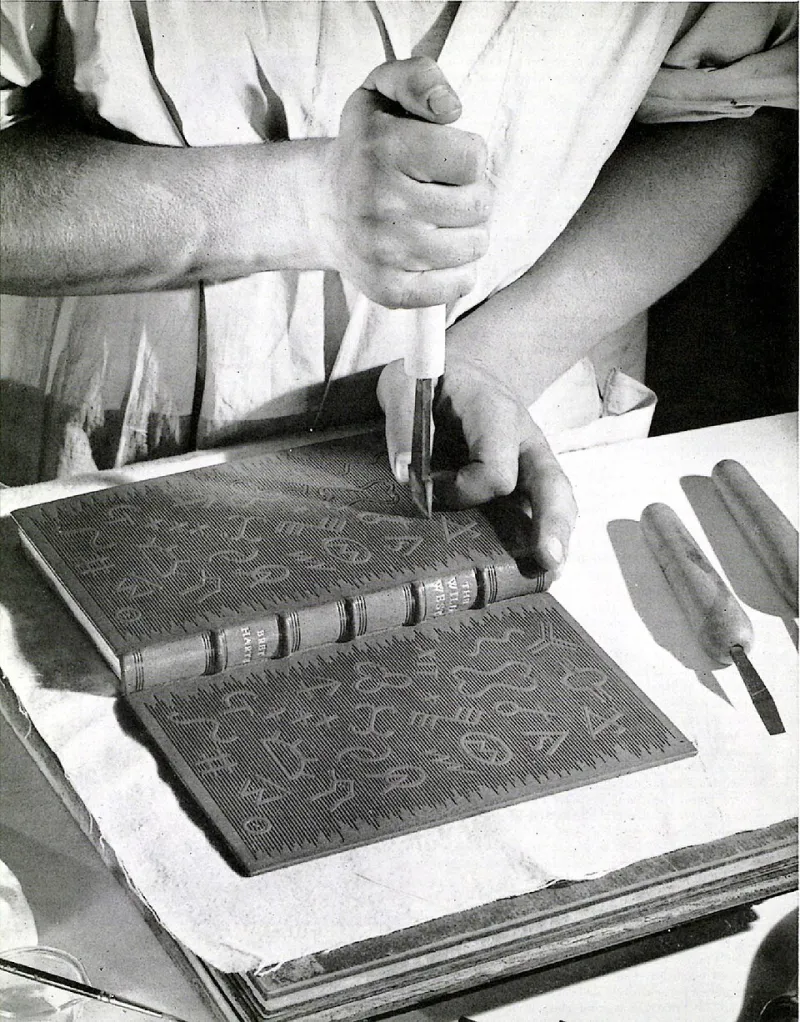
Setting a single line of type by hand takes about ten minutes if you know what you're doing. If you don't, longer. You're pulling individual metal letters from a case — a shallow wooden tray divided into compartments — arranging them in a composing stick, spacing them with thin metal slugs, and building toward a block of text that will eventually be locked into a chase, inked, and pressed against paper with enough force to leave a slight indentation you can feel with your fingertip.
This is movable type. It is five hundred and some years old. It is having a moment.
Not a mainstream moment — letterpress printing isn't about to displace InDesign or the commercial offset press. But in basements, converted garages, and small storefronts from Asheville to Oakland, a growing community of printers is choosing this process deliberately, sometimes exclusively, and with a conviction that goes well beyond hobbyist enthusiasm.
Saving the Type Before It's Gone
The infrastructure for letterpress printing nearly disappeared entirely. When phototypesetting and then desktop publishing made metal type economically obsolete — a transition that was mostly complete by the 1980s — most foundries closed. The type was melted down, sold for scrap, or simply abandoned.
What survived did so largely by accident: print shops that kept their old equipment because it was too heavy to move, university art departments that held onto Vandercook proof presses for occasional use, and a handful of collectors who understood what was being lost.
In recent years, a preservation effort has quietly taken shape around what remains. Organizations like the American Printing History Association have been cataloging surviving type collections. Individual printers have been tracking down orphaned cases of type from estate sales and closed print shops, sometimes driving hundreds of miles to pick up a cabinet of hand-set lead type that would otherwise end up in a dumpster.
A printer in Cincinnati — who started her studio in a rented garage five years ago — describes finding a complete set of 18-point Caslon in a decommissioned print shop in rural Ohio. "The guy who owned the building had no idea what it was. He was going to throw it out. I loaded it into my car in about forty trips."
That kind of rescue operation has become a recurring story in the letterpress community. The type is out there. The people willing to go get it are increasingly young, increasingly trained in graphic design rather than traditional printing, and increasingly motivated by something that's harder to articulate than just craft appreciation.
The Argument Pressed Into Paper
Ask letterpress printers why they do it and the answers cluster around a few themes, but one comes up more than any other: control. Specifically, the kind of control that digital design tools offer and simultaneously take away.
In digital design, everything is adjustable, reversible, and infinitely reproducible. That's genuinely powerful. It's also, for some designers, a source of anxiety rather than freedom. When nothing is permanent, nothing quite commits. The work can always be revised. It never fully lands.
Letterpress printing commits. When the press comes down, the impression is made. The paper holds it. You can feel the decisions — literally, with your hands — in a way that a screen cannot replicate.
"I spent three years doing brand identity work on a laptop," says a designer in Brooklyn who now runs a small letterpress studio as his primary practice. "Everything I made was technically perfect and I couldn't tell you what any of it felt like. Letterpress gave me back the feeling of the work."
That tactile dimension is part of what's driving demand from clients too. Business cards produced on a letterpress press — with deep impression, hand-mixed ink colors, and paper stock chosen for how it takes the impression — have become a kind of status object in certain professional circles. Not because they're flashy, but because they're unmistakably made. They communicate effort in a way that a matte-laminated card from an online printer simply doesn't.
The Learning Curve as the Point
Letterpress printing is not easy to learn. The mechanical knowledge alone — understanding how a platen press works, how to set impression depth, how to mix ink to the right consistency for a given stock — takes years to accumulate. Add hand-setting type, designing within the constraints of available type sizes and faces, and troubleshooting the thousand small variables that affect a print run, and you have a practice with genuine depth.
For a generation that came up with tools designed to flatten the learning curve as much as possible, that depth is part of the appeal. There's something happening in certain creative communities — a deliberate turn toward skills that are hard to acquire and impossible to automate. Letterpress sits squarely in that territory.
Workshops and residencies have proliferated to meet the demand. The International Printing Museum in Carson, California runs regular classes. Studios around the country offer weekend intensives. YouTube channels dedicated to letterpress technique have accumulated surprising subscriber counts. The knowledge that was nearly lost is being reconstructed, piece by piece, by people who never worked in commercial print shops and are learning it as a chosen discipline rather than a trade.
Limited Runs, Real Objects
The output of this community tends toward the small and the specific. Limited-edition broadsides. Artist books with hand-set text and hand-pulled prints. Posters for local events. Greeting cards that feel like gifts before you open them. Wedding invitations that people keep.
The limited-run nature isn't a constraint — it's a feature. A letterpress print exists in a defined quantity, made by specific hands, on a specific press, on a specific day. The variation between copies is slight but real. The edition is genuinely limited because the process genuinely limits it.
In a world where digital files can be reproduced infinitely and perfectly, that finitude has started to feel like a kind of value. Not nostalgia exactly. Something more like a correction — a reminder that making things can mean making a specific number of them, with care, and then stopping.
The press doesn't know it's making a statement. But the person running it does.