Spine and Thread: The Hidden Bookbinders Turning Pages Into Permanent Things
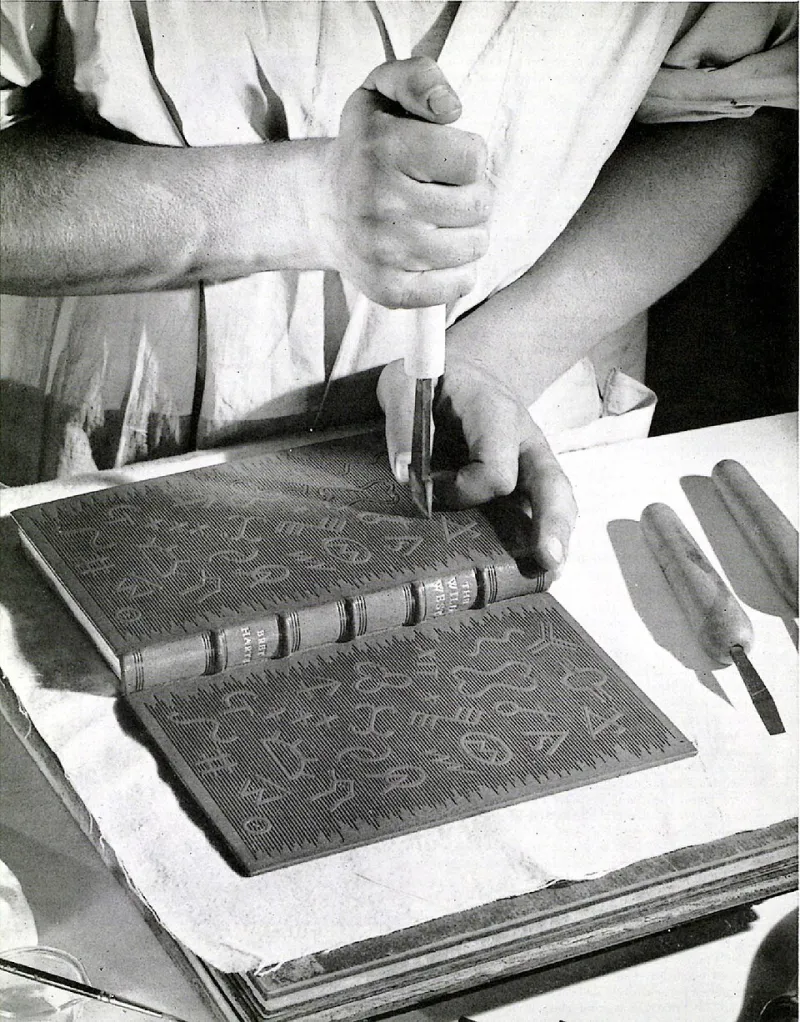
Photo: AnonymousUnknown author, Public domain, via Wikimedia Commons
The book sitting on the worktable in a converted garage outside Asheville, North Carolina, does not have a barcode. It does not have a publisher's imprint. It does not have a price printed on the back flap, because it was never meant to be sold in any conventional sense. It was commissioned by a retired literature professor in Vermont who waited fourteen months for it, and it will probably outlast everyone currently alive.
The woman who made it has been binding books by hand for nineteen years. She learned from a bookbinder in Chicago who learned from someone in Italy. The lineage goes back further than she can trace, which is part of why she takes it seriously.
A Craft That Predates the Machine
Handbinding is not a recent revival. It never stopped, which is the first thing practitioners want you to understand. While offset printing and perfect binding and print-on-demand transformed publishing into an industrial operation, a thin, unbroken thread of people kept doing it the old way — not out of stubbornness, exactly, but because the old way produces something that the industrial way cannot replicate.
The techniques in use today in home studios and small workshops across the country are recognizably descended from practices that were already ancient when Gutenberg was building his press. Coptic stitch, which leaves the spine exposed and allows a book to lie perfectly flat. Long stitch, which runs thread in visible patterns across the outside of the spine. Japanese stab binding, which pierces through the entire text block with a needle and creates a structure so durable it borders on indestructible. French link stitch. Kettle stitch. Tight back and hollow back. The vocabulary alone takes years to absorb.
What these methods share is a relationship between structure and material that machine binding can't approximate. A hand-bound book is sewn, not glued. Its signatures — the folded sections of pages — are physically attached to each other and to the cover in ways that distribute stress across the entire structure. Drop a hand-bound book. Open it ten thousand times. The spine flexes. It doesn't crack.
The Workshop as Sanctuary
The binders Wiltiky connected with work in spaces that reflect the seriousness of the practice. Bone folders, awls, and needles arranged on pegboards. Stacks of leather and cloth and decorative papers sourced from suppliers in Japan, Italy, and a handful of American papermakers keeping their own obscure traditions alive. Presses — the bookbinding kind, not the printing kind — that exert controlled pressure on freshly glued sections. The smell of paste and leather and something older than either.
These are not hobbyist spaces. They're workshops in the full sense, and the people who run them treat the craft with an intensity that can read as intimidating until you understand what's at stake.
"A book I make is going to exist for two hundred years if someone treats it reasonably well," says a binder based in Portland, Oregon, who has been doing this full-time for eleven years and keeps a waiting list he describes as "aspirational" for clients and "anxiety-inducing" for himself. "That's not a thing I take lightly. I'm making something that will outlive me. That changes how you work."
The Collector Network
The people who commission hand-bound books are not, for the most part, wealthy in the flashy sense. They're readers, scholars, writers, and obsessives who have reached a point in their relationship with books where mass production feels like an insult to the content. They want their most important texts — a beloved novel, a family history, a collection of letters, a manuscript they wrote themselves — to exist in a form that takes the words as seriously as the words deserve.
This community is small, interconnected, and fiercely loyal to the binders they've found. Recommendations pass between collectors with the gravity of referrals to a trusted doctor. When a binder retires or moves or simply gets too backed up to take new work, the ripple effect is felt across the network for years.
Some collectors commission blank books — journals and notebooks bound to their specifications in materials they've chosen — and then fill them over decades, producing volumes that are simultaneously art objects and intimate documents. Others bring existing books to be rebound, rescuing deteriorating copies of texts that matter to them from the entropy of cheap industrial binding.
"I've had people bring me books that were held together with rubber bands and prayer," says the Asheville binder. "And I've sent them back something they'll hand to their grandchildren. That transaction means something. It's not just commerce."
Why It Matters Now
There's a broader argument to be made here, and the binders make it without much prompting. In an era when text is increasingly weightless — stored on servers, readable on any device, disposable by nature — the hand-bound book is a counter-argument in physical form. It insists that some things deserve permanence. That the vessel matters, not just the content. That the act of making something carefully and slowly and with your hands produces an object that carries that care in its structure.
It's not nostalgia. Nostalgia looks backward. This is something else — a refusal to accept that efficiency is the only value worth optimizing for, expressed in linen thread and bookboard and the particular satisfaction of a spine that opens without resistance.
The books exist. They'll keep existing. That's the whole argument, and it's a pretty good one.