Grow Quiet, Grow Wild: The Invisible Gardeners Reclaiming America's Forgotten Urban Corners
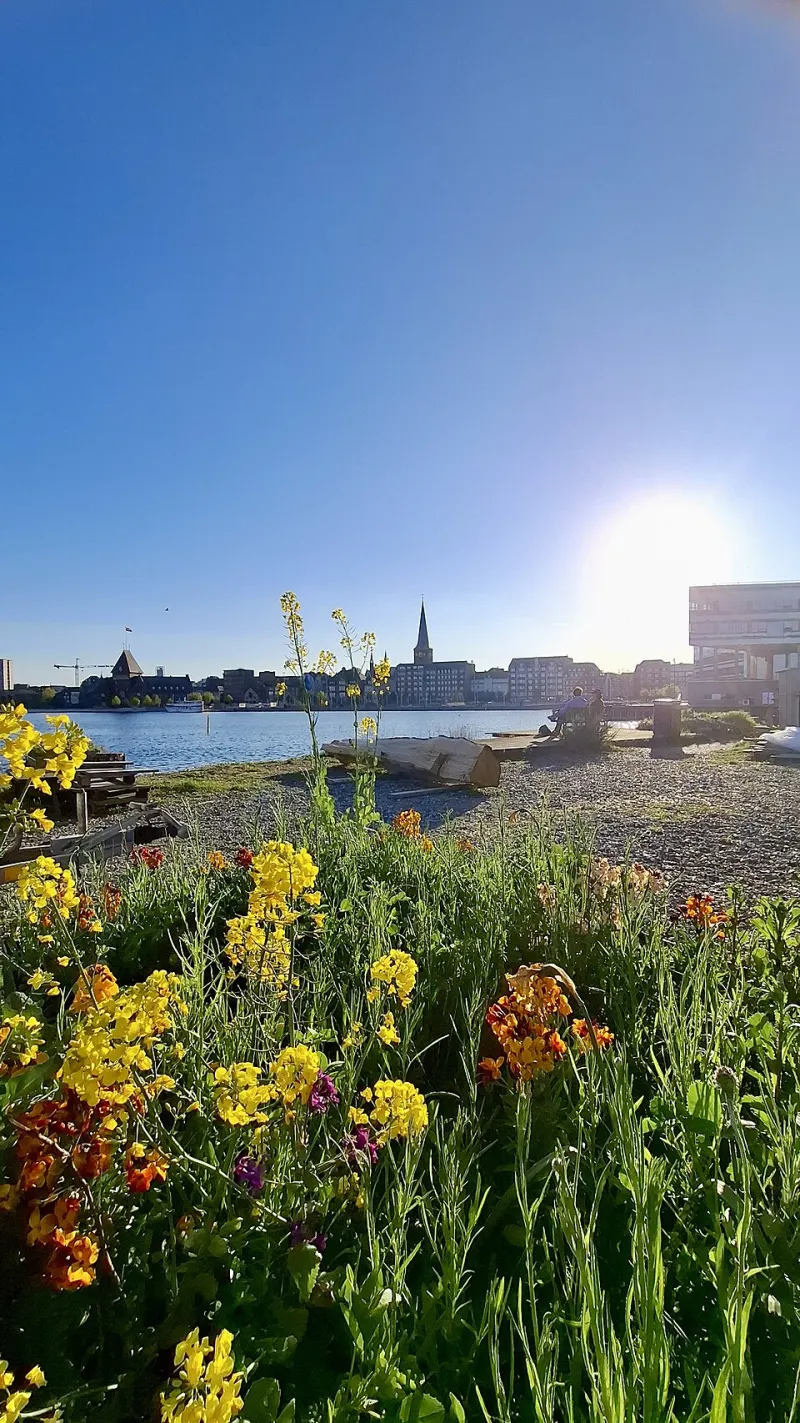
Photo: Ciara Ní Riain, CC BY-SA 4.0, via Wikimedia Commons
The lot on the corner of a northeast Philadelphia block has been empty since at least 2009. According to city records, it belongs to an LLC that hasn't responded to a tax notice in four years. According to the people who live nearby, it's been a dumping ground, a problem, and an eyesore, in roughly that order.
According to the people who show up with hand trowels at 5:45 on a Tuesday morning, it's a forest. A small one, granted. But a forest.
The Work Happens in the Dark
Guerrilla gardening isn't new — the term has been floating around since at least the 1970s, when a New York activist named Liz Christy started planting things in places she wasn't technically authorized to plant things. But the version happening right now across American cities is more networked, more ecologically sophisticated, and considerably more intentional than the scattered acts of botanical defiance that came before.
These aren't people tossing wildflower seed bombs out of car windows, though some of them do that too. The groups operating in Philadelphia, Detroit, Los Angeles, Louisville, and a dozen other cities are running something closer to covert ecological restoration projects. They do soil testing. They select plants for local climate resilience and pollinator support. They think about canopy layers and root competition and water retention. And then they go plant things in places where nobody asked them to, before anyone official is awake to notice.
"We're not vandals," says a woman who coordinates one such group in the Detroit area and goes by the name she uses for the work: Fern. "Vandals make things worse. We're making things better. The law just hasn't caught up to the distinction."
The Taxonomy of Forgotten Space
Every city has more of it than it thinks. Abandoned lots are the obvious category — properties stuck in ownership limbo, tied up in probate, or simply neglected by absentee landlords who've stopped caring. But the groups Wiltiky spoke with operate across a much wider range of overlooked terrain.
Highway medians. The strips of compacted earth between sidewalk and curb, officially called "tree lawns" in some municipalities, that most cities fill with dying grass and nothing else. Rooftop corners on buildings whose owners don't go up there anymore. The triangle of dead space created when a road curves and leaves an orphaned wedge of city behind. Retaining walls. Drainage channels. The sides of bridges.
Some of these spaces get small interventions — a few native perennials tucked in, a handful of bulbs that will come back every spring without anyone tending them. Others become genuine projects, maintained over months or years by rotating crews who treat the work as ongoing rather than finished.
In Los Angeles, one group has been quietly cultivating a slope above a freeway on-ramp for three years. The slope was bare concrete aggregate when they started. Now it has established chaparral species, a population of native bees, and a view that commuters slow down to look at without knowing why.
The Tension With Visibility
Here's the paradox at the center of all this: the work is beautiful, and beauty attracts attention, and attention is exactly what these groups don't want.
Some of what they're doing is technically legal, or at least legally ambiguous enough that nobody's been prosecuted for it. Planting on a city median without a permit is a gray area in most municipalities. Planting on private property without the owner's consent is not. And because many of these groups work across both categories simultaneously, and because the difference isn't always obvious from the outside, they tend to operate under a collective policy of strategic invisibility.
No logos on their gear. No tagging of the sites. No Instagram accounts that would let anyone map their locations. When they talk to press — which they rarely do — they ask for geographic vagueness and no last names. The work is the thing. The credit is a liability.
"The moment a site gets famous, it gets managed," says a coordinator in Louisville who asked to be called Ray. "And the moment it gets managed, it stops being ours. Which is fine, actually — we want it to be the city's. We just don't want it to get paved over first."
What Grows When Nobody's Looking
The ecological outcomes, in the sites that have been running long enough to show results, are genuinely striking. A neglected lot in Baltimore that a group has been working for four years now supports seventeen species of native plants, three documented butterfly species, and a pair of red-tailed hawks that nest in a volunteer tree nobody planted intentionally. The hawks showed up on their own, which is the point.
This is the philosophy underneath the shovels: not gardening as control, but gardening as invitation. You create conditions. You select species that belong in the ecosystem. And then you let the ecosystem do what ecosystems do when you leave them alone.
Fern, the Detroit coordinator, describes it as "planting a question and waiting for the city to answer it." The answer, more often than not, is life. Complicated, unmanaged, politically inconvenient, deeply necessary life.
Somewhere in your city, before the sun comes up, someone is on their knees in the dirt doing this. You've probably walked past the results without knowing it. That's exactly how they'd like to keep it.