They Knew Every Weird Movie You Never Heard Of — Now They're Your Favorite Corner of the Internet
They Knew Every Weird Movie You Never Heard Of — Now They're Your Favorite Corner of the Internet
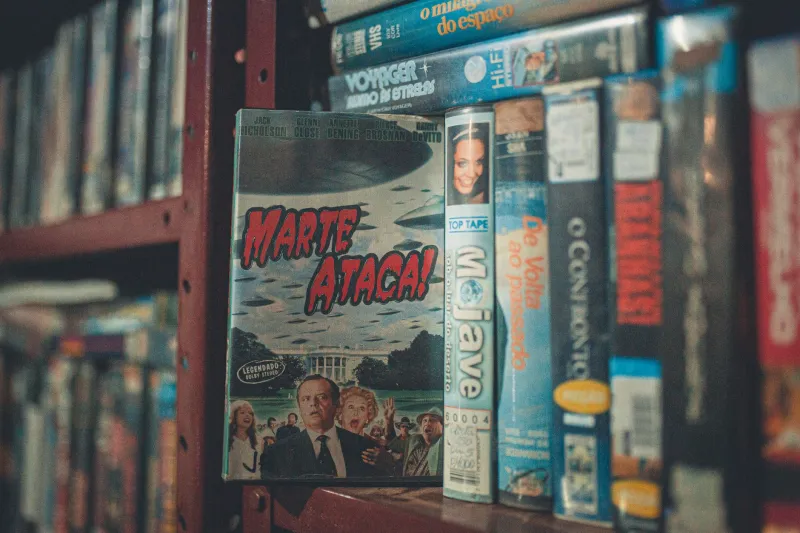
There's a particular kind of magic that used to live inside a video store. Not the big Blockbuster chains with their sanitized new releases and late fee anxiety — but the weird ones. The mom-and-pop shops tucked between a laundromat and a Chinese buffet, staffed by someone who would physically stop you from renting Armageddon and press a VHS copy of Repo Man into your hands instead. That person knew things. And for a long time, it looked like that knowledge was going to die quietly along with the last rewound tape.
It didn't.
The Clerks Who Refused to Clock Out
Meet the people who are quietly becoming some of the most trusted voices in film discovery — not because an app promoted them, but because they earned it one obsessive recommendation at a time.
Denver-based Marcus Trell spent eleven years behind the counter at a beloved independent video shop called Reel Tangent before it closed in 2018. He describes the shutdown as "losing a second language." Within a year, he'd launched a Discord server called The Dusty Shelf that now hosts over 4,000 members trading recommendations for Italian giallo films, Filipino action cinema, and forgotten American made-for-TV thrillers from the 1970s. "People are starving for someone to just tell them what's actually worth watching," Marcus says. "The algorithm gives you more of what you already liked. That's not discovery. That's an echo."
Out of Portland, Oregon, a former clerk who goes by the handle @VHSVirago runs a late-night newsletter called Flip Side that drops every Friday at midnight — intentionally, she says, to mimic the ritual of a late-night video store run. Each issue profiles one deeply obscure film, complete with handwritten-style annotations, sourcing notes, and a section called "Why Your Algorithm Will Never Find This." She started it for fun in 2020. She now has over 12,000 subscribers.
"I used to have maybe 200 regulars at the store," she says. "Now I'm recommending movies to people in Nebraska, in rural Georgia, in places that never had a good video store to begin with. That's kind of wild to sit with."
The Anti-Algorithm as a Philosophy
What these former clerks are building isn't just nostalgia content. It's something more pointed — a deliberate rejection of the passive scroll. On mainstream platforms, content surfaces because engagement metrics demand it. On The Dusty Shelf or in a Flip Side newsletter, something surfaces because a human being with taste and context decided it mattered.
In Chicago, a collective called the Midnight Annex runs a Twitch channel that streams cult and fringe films three nights a week, preceded by a fifteen-minute live commentary session hosted by former clerks who worked at three different now-defunct Chicago video shops. The chat during these sessions reads less like a comment section and more like a film school seminar — members debating cinematography, debating distribution history, calling each other out for hot takes.
"We're not trying to be critics," says one of the Midnight Annex hosts, who asked to be identified only as Dez. "Critics write about films from a distance. We're fans who happen to know too much. There's a difference."
That distinction matters to their audience. In a media landscape where every major streaming platform employs teams of data scientists to predict what you'll click, there's a growing appetite for the genuinely human alternative. Recommendation as conversation. Curation as relationship.
Niche Is the New Mass Market
The economics here are small but real. Several of these communities have found modest sustainability through Patreon, Substack subscriptions, and the occasional sponsored post from boutique physical media labels — companies like Vinegar Syndrome or Severin Films, which specialize in restored cult releases and whose entire business model depends on audiences who already care deeply about obscure cinema.
It's a micro-economy built on specificity. And that specificity is exactly the point. These aren't people trying to go viral. Marcus at The Dusty Shelf actively discourages his members from posting Discord content to Twitter or Reddit. "If someone finds us because they genuinely want to talk about Thai horror from the '90s, great. If they find us because a meme blew up, that changes the room."
There's something almost philosophical about that gatekeeping instinct — the same instinct that made these people great video store clerks in the first place. Not gatekeeping as exclusion, but gatekeeping as curation. Protecting the frequency so the signal stays clear.
What a Human Filter Actually Does
Spend an hour in any of these communities and you start to understand what's been lost in the streaming era — and what these people are quietly rebuilding. Platforms like Netflix or Max have tens of thousands of titles. Most users interact with maybe thirty or forty of them, surfaced by recommendation engines that optimize for completion rates and rewatch probability. It's efficient. It's also kind of deadening.
The former clerks operate differently. They ask questions. What do you actually want to feel? What's the last thing that genuinely surprised you? Are you open to subtitles, to grain, to a movie that doesn't resolve cleanly? They treat film watching as an experience to be matched to a person, not a product to be moved.
"I had a guy in the Discord last month who said he'd been watching the same ten movies on rotation for two years," Marcus recalls. "We spent about a week going back and forth, and then I pointed him toward a 1974 Spanish film called Furia Española. He came back three days later and said it cracked something open in him. That's the whole thing. That's what I miss about the store and what I'm trying to keep alive."
The video store is gone. The clerk, it turns out, was never just about the store.