Basement Frequencies: Pressing Lost America to Vinyl Before the Tape Runs Out
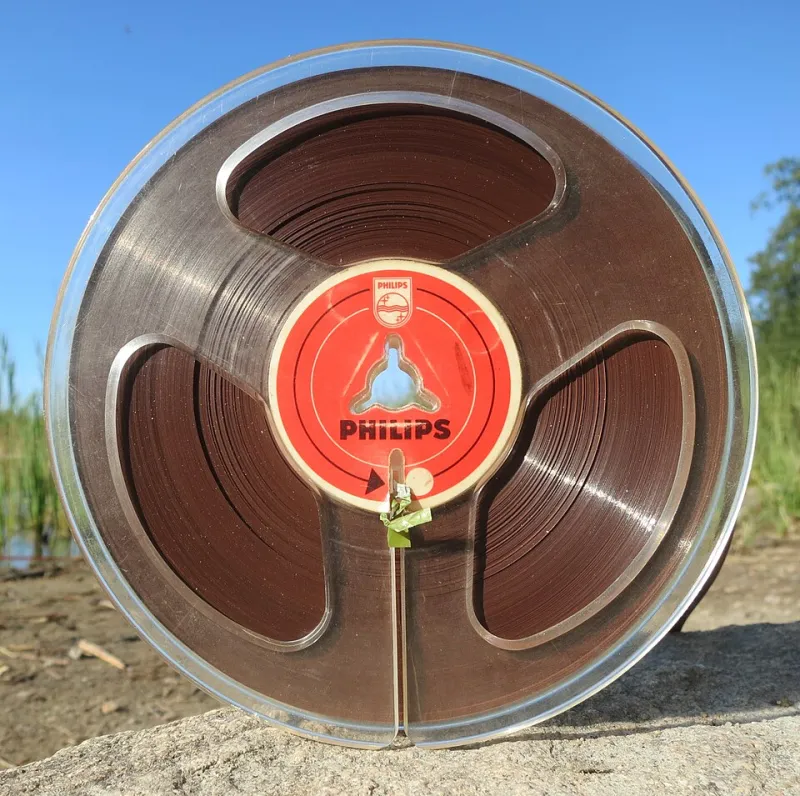
Photo: R. Henrik Nilsson, CC BY 4.0, via Wikimedia Commons
The tape smells like vinegar before you even open the box. That's the first bad sign. The second is the way it sticks to itself when you try to unspool it, the magnetic coating releasing from the backing in long, translucent strips. You've got maybe one playback left in this thing before it's gone entirely. Maybe two if you're careful and lucky and the playback head is clean.
What's on it? Nobody's entirely sure. The label on the box says First Baptist, Baton Rouge, 1981 in ballpoint pen, and below that, a name nobody recognizes anymore.
This is the situation facing a scattered, semi-organized community of archivists, engineers, and record enthusiasts who have quietly made it their business to rescue regional American recordings before the physical media carrying them gives up completely. They work in home studios, community spaces, and borrowed time at small pressing plants. They fund releases through small labels, Bandcamp pages, and sheer personal stubbornness. And they are, without exaggeration, saving things that exist nowhere else.
What Got Left Behind
Between roughly 1965 and 1995, a staggering volume of music got recorded in the United States that never made it past a local audience. Regional gospel groups, country outfits working the honky-tonk circuit in states that didn't have Nashville connections, soul singers who recorded one single on a label headquartered above a dry cleaner, polka bands, conjunto groups, bluegrass pickers who pressed two hundred copies of a record and sold them at the county fair.
This music existed in a commercial ecosystem that the major labels barely acknowledged. The recordings were made in church basements, converted garages, and small regional studios that operated on shoestring budgets with equipment that was already second-hand when they bought it. The masters — almost always quarter-inch or half-inch reel-to-reel tape — got stored in whatever was available: cardboard boxes, closets, the trunks of cars.
Decades later, those masters are dying. Magnetic tape has a lifespan. Acetate degrades. Improper storage accelerates everything. The window for recovering usable audio from a lot of this material is closing fast, and once it closes, it doesn't reopen.
The Hunters
Finding the tapes is its own discipline. Estate sales are the most reliable source — someone passes away, their family cleans out a house, and suddenly a box of reel-to-reel tapes ends up on a folding table next to old Reader's Digests and ceramic figurines. Experienced hunters know what to look for and move fast. Word of mouth matters enormously. Relationships with local historians, church archivists, and old-school record store owners generate leads that no database ever would.
Marcus, a sound engineer based in Memphis who has been doing this work for about twelve years, estimates he's evaluated somewhere north of three thousand tapes in that time. A significant portion were unrecoverable. A smaller portion were technically salvageable but musically unremarkable. But a subset — he won't put a number on it, but it's not small — contained recordings that genuinely stopped him cold.
"There's this one," he says, "a gospel quartet from rural Mississippi, recorded sometime in the mid-seventies. Nobody knows who they are. The tape was in rough shape. We spent probably forty hours on the restoration. And what came out of it — it's one of the most beautiful things I've ever heard. It was sitting in a box in a storage unit for thirty years."
That recording is now pressed to vinyl and available through a small label Marcus runs with two partners. It has found an audience. Not a massive one, but a real one.
The Pressing Question
Why vinyl? In an era when digital distribution is essentially free and reaches everywhere, the choice to press physical records feels like a statement as much as a practical decision — and it is both.
The practical argument goes like this: vinyl is a stable archival format. A well-pressed, well-stored record will outlast any digital file format that currently exists, because file formats become obsolete and the hardware to read them disappears. A record can be played on any turntable, and turntables have been continuously manufactured for over a century. Pressing to vinyl is a form of future-proofing.
The cultural argument is harder to articulate but no less real. These recordings came from communities. They were made for people to hold and play and share. Putting them back into a physical object — something you can look at, read the liner notes on, hand to someone else — honors the context they came from in a way that a streaming link doesn't quite manage.
There's also the matter of documentation. Every release in this shadow discography comes with as much contextual information as the archivists can assemble: dates, locations, personnel where known, photographs if they exist, oral history from anyone still alive who was there. The record becomes a vessel not just for the music but for the story around it.
The Scale of What's Left
Nobody has a reliable count of how much unrecovered regional American recording material still exists in private hands, storage facilities, and institutional archives that haven't been fully catalogued. The estimates that circulate in this community are large enough to be genuinely daunting.
The work is slow because the resources are limited. Tape restoration is skilled, labor-intensive work. Pressing vinyl costs money. Licensing can be complicated when original rights holders are deceased and estates are fractured or untraceable. There is no cavalry coming — no well-funded federal initiative, no major label with a philanthropic arm writing big checks for this.
What there is, instead, is a loose network of people who care enough to keep going. They share equipment recommendations, restoration techniques, and leads on collections. They argue about methodology on forums that most of the internet has never heard of. They show up at estate sales at seven in the morning.
The tape with First Baptist, Baton Rouge, 1981 on the label? Marcus got a transfer off it. Barely. One pass, with the machine running slow, and they caught most of it.
It sounds like a room full of people singing like their lives depend on it.
Somebody should hear that.