If They Won't Make It, We Will: Inside the Garages Reverse-Engineering Everything
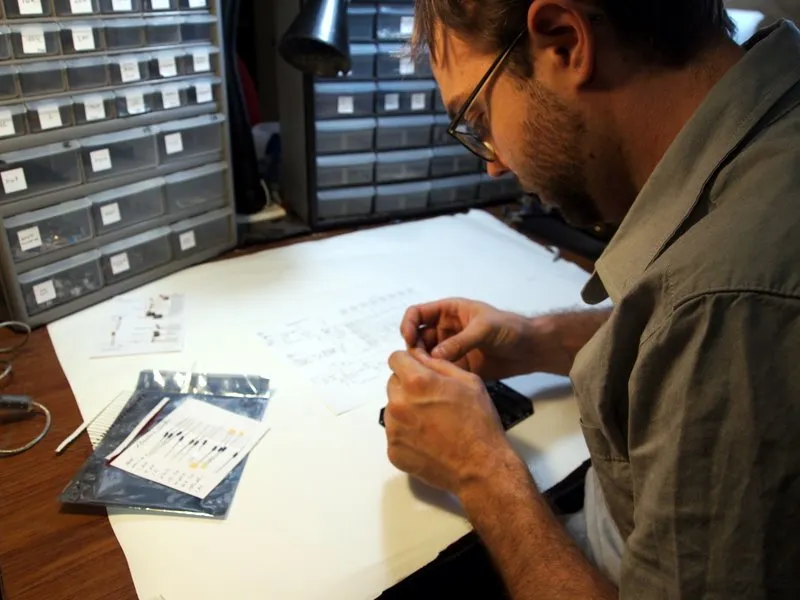
Photo: Create Digital Media, CC BY-SA 2.0, via Wikimedia Commons
There's a particular drill press that a machinist in Tucson has been searching for going on six years. Not searching to buy one — he found two of the original units, both in rough shape, within his first year of looking. He's been searching for something harder to locate: the exact specifications that would let him make another one from scratch.
The press was manufactured by a mid-sized American tool company that was acquired, absorbed, and effectively dissolved in the early nineties. The design — a specific geometry of the column and table adjustment that gives it a particular feel and accuracy at low speeds — never made it into any successor product. It just stopped existing, except in the units already out there, slowly wearing out and becoming increasingly difficult to keep running.
He has now built two working replicas. He's documented the process in exhaustive detail. And he's quietly become a node in a network of people doing essentially the same thing with a startling variety of objects.
The Philosophy First
Before you get into the specifics of what this community makes, it's worth sitting with what they believe, because the belief is the engine of all of it.
The core idea is something like this: an object that exists in the physical world carries its own logic. It was designed by someone who made specific decisions — about materials, dimensions, tolerances, mechanisms — and those decisions are encoded in the thing itself. If you're patient and skilled enough, you can read those decisions back out of the object. You can understand why it works the way it works. And if you can understand it completely enough, you can reproduce it.
This sounds straightforward until you follow it to its implications. It means that corporate decisions about what to manufacture and what to discontinue are not, from this perspective, final verdicts. A company can stop making something. It cannot make the design stop existing. The people in this community have decided that if they can recover the design — through measurement, through material analysis, through the kind of patient reverse engineering that can take years — they have both the ability and something close to a moral right to keep making it.
That's a genuinely interesting position to hold in a culture that treats intellectual property as almost sacred. The community is careful about where it sits legally, and the conversations about what can be shared publicly versus what stays within trusted networks are ongoing and nuanced. But the philosophical stance is clear.
What Gets Made
The range of objects being reverse-engineered and hand-produced in this community is wide enough that it resists easy summary. A partial inventory from conversations with active members: vintage audio amplifier circuits that used components no longer in production, recreated with modern equivalents spec'd to match the original performance characteristics. A specific model of mechanical keyboard switch that was manufactured for about four years in the late eighties and has never been replicated by any commercial vendor. Replacement parts for agricultural equipment that's still in active use on small farms but hasn't been supported by the manufacturer in decades. A particular style of hand plane favored by certain woodworkers that the major tool companies abandoned in favor of designs with lower production costs.
The electronics and audio communities have the longest history with this kind of work — tube amplifier enthusiasts have been reproducing discontinued circuits since the transistor age, and the culture around vintage audio gear has always included a significant DIY manufacturing component. But the practice has spread well beyond audio, and the current moment feels to many participants like a genuine expansion of scope and ambition.
Makerspaces have been part of this, though the relationship is complicated. The shared equipment in a well-stocked makerspace — CNC mills, laser cutters, 3D printers, PCB fabrication tools — has dramatically lowered the barrier to producing certain kinds of objects. But a lot of the most serious work in this community still happens in private garages and workshops, with personally owned equipment that's been calibrated and modified for specific purposes over many years. There's a craft dimension to this that doesn't fully translate to shared-space production.
The Documentation Problem
One of the most interesting tensions in this community is around how to document and share what gets figured out.
The people doing reverse-engineering work generate an enormous amount of knowledge: measurements, material analyses, process notes, failure logs, design iterations. Some of this gets shared openly — there are forums, wikis, and repositories where documentation lives publicly. But a significant portion stays in private networks, shared among people who know each other, for reasons that range from legal caution to a genuine belief that certain knowledge should require some demonstrated commitment before it's handed over.
This creates an interesting epistemology. The community values documentation deeply — there's a strong ethic around not letting hard-won knowledge die with the person who found it — but also recognizes that indiscriminate sharing creates problems. The result is a layered system of public and private knowledge that newcomers navigate gradually, earning access to more detailed information as they demonstrate seriousness and skill.
The documentation that does go public is often remarkable in its thoroughness. Detailed write-ups of reverse-engineering processes, with photographs at every stage and honest accounts of dead ends and mistakes, have become a genre unto themselves. Reading one is a specific kind of pleasure — there's something genuinely satisfying about watching someone think through a problem with that level of rigor and transparency.
The Longer Argument
This subculture sits at an interesting intersection of several things happening in American life right now: growing frustration with planned obsolescence, renewed interest in physical craft and making, and a broader skepticism about corporate decisions that affect what tools and objects are available.
The right-to-repair movement has gotten more mainstream attention, particularly around electronics and agricultural equipment, and there's some overlap between that advocacy work and what's happening in these garages. But the DIY engineering community tends to be less interested in lobbying and more interested in just solving the problem in front of them. If the company won't fix it and won't let you fix it, you figure out how to make a new one. That's not a political position so much as a practical one.
The machinist in Tucson, asked why he spent six years on a drill press that he could have replaced with a modern unit, thought about it for a moment before answering.
"The modern ones work," he said. "This one is right."
There's a whole worldview in that distinction. These are people who have developed fine enough judgment to know the difference between something that functions and something that's actually correct — and who have decided, collectively, that correct is worth whatever it takes to keep it in the world.