Every Turn by Heart: The Rural Mail Carriers Who Navigate by Memory Alone
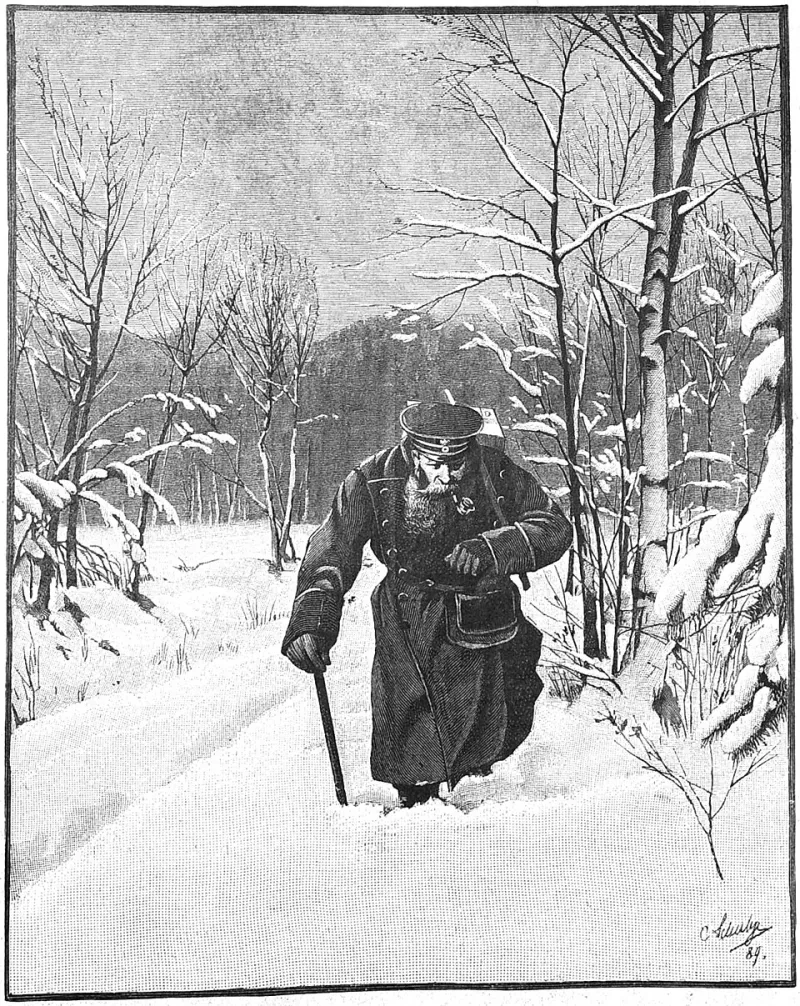
Photo: various, Public domain, via Wikimedia Commons
The road doesn't have a name on any map. It has a name locally — everybody calls it the Hendersons' road, even though the Hendersons sold their farm in 1987 and moved to Florida — but that name doesn't appear in any database the United States Postal Service maintains. The carrier who runs this route knows the road because she's been turning onto it every weekday for twenty-two years. She knows it turns to gravel after the first quarter mile, that the culvert at the low point floods every spring for about two weeks, and that the mailbox at the end belongs to a retired couple who get a lot of seed catalogs and should be checked on if their mail starts piling up.
None of this is written down anywhere. It lives in her.
Routes That Predate Documentation
American rural mail delivery has a long and genuinely complicated history. The Rural Free Delivery system, established in the 1890s, pushed mail service out to farm communities that had previously been underserved, and the routes that developed over the following decades were often shaped less by formal planning than by practical reality: where the roads went, where people actually lived, which paths were passable in mud season and which weren't.
In many rural areas, those routes have been continuously run — and continuously passed down — ever since. Not always through formal training. Often through a period of riding along with the outgoing carrier, learning the territory by being in it, absorbing the accumulated local knowledge through proximity and repetition. The route becomes known the way a neighborhood becomes known: gradually, experientially, until it's just part of how you understand the world.
For carriers in genuinely remote areas — parts of rural Appalachia, the high plains, the interior of Alaska, stretches of the rural South — this informal transmission of knowledge has been the only reliable system available. Formal documentation, where it exists at all, often describes something approximating the route rather than the route as it's actually run. The gap between the official record and operational reality can be substantial.
What a Carrier Actually Knows
Spend a day riding with a veteran rural carrier and the depth of their geographic knowledge becomes hard to overstate. They know which driveways flood and which drain fast. They know the dog situation at every house — which ones are aggressive, which ones bark but are harmless, which ones have been known to damage mail. They know who's elderly and lives alone, and they've developed informal wellness check systems that aren't in any job description but are very much part of the job.
They know the seasonal rhythms of their routes: when the hunting season brings strangers down unmarked roads, when the snowpack makes certain loops impassable, when the summer heat means leaving packages in shade rather than direct sun. They know which customers have standing instructions about where to leave things, instructions never formalized with the post office but understood between the carrier and the household over years of quiet negotiation.
This is not inefficiency. This is infrastructure. It just doesn't look like infrastructure because it doesn't have a server room.
The Retirement Cliff
The crisis, such as it is, comes at the end of a career. When a veteran rural carrier retires after two or three decades on the same route, the question of knowledge transfer becomes suddenly urgent. The official answer — that new carriers are trained on documented route information and equipped with GPS devices — glosses over a real problem in areas where the documented route information is incomplete and GPS coverage is unreliable or nonexistent.
In practice, the transition often depends on whether the outgoing carrier is willing and able to spend time riding with their replacement. Many are. Some aren't, or can't, due to health or the timing of their departure. When that riding-along period doesn't happen, the new carrier is left to reconstruct local knowledge from scratch, which means missed deliveries, frustrated customers, and a lot of backing up on roads that don't have room for it.
Postal workers and union representatives in rural districts describe this as a persistent, low-grade institutional problem that never quite rises to the level of formal crisis but creates ongoing friction in communities that can least afford it. Rural residents, particularly elderly ones who depend on mail delivery for medications and essential communications, feel the disruptions acutely.
Modernization and Its Limits
The USPS has been pushing toward standardized GPS-based navigation and digitally documented routes for years, and in urban and suburban contexts this makes obvious sense. In rural ones, the picture is more complicated.
GPS systems, even good ones, can't tell you that the bridge on County Road 14 has a weight limit that the county hasn't gotten around to posting, but that everyone local knows about. They can't tell you that the family at the end of the hollow prefers their mail left under the porch overhang because the box gets wet in a northwest wind. They can't tell you that the road looks passable but has a soft shoulder on the left side that will put you in the ditch if you drift toward it in wet weather.
The carriers who know these things learned them over years. Some have started writing things down on their own initiative — informal guides, handwritten notes, personal maps annotated with local knowledge. These documents are unofficial, unsanctioned, and often more useful than anything in the formal system.
A few rural postal districts have begun more proactive knowledge-capture programs, working with long-tenured carriers to document their routes in detail before retirement. The results, by most accounts, are valuable. The challenge is that the program requires time and buy-in that isn't always available in an understaffed, overextended system.
The Carrier as Community Node
What gets lost when this knowledge disappears isn't just operational efficiency. Rural mail carriers in remote areas often function as informal community connectors in ways that are hard to replace. They notice things. They carry information between households — not private information, but the small social currency of rural life: who's had a health scare, whose family is visiting, whose driveway needs attention.
This isn't part of the job description. It's part of the job.
The woman who turns onto the Hendersons' road every weekday morning has been doing it long enough that the road is, in some meaningful sense, hers. She knows it the way you know a relationship — not from a description of it, but from being in it, over and over, until the knowledge is in your hands and your feet and your sense of how time moves on a Tuesday morning in a place that most of the country will never see.
When she retires, someone else will learn it. Probably. Hopefully.
But it won't be the same knowledge. It'll be a new one, built from scratch, one turn at a time.